Free tools, no signup
Insulation calculators
Work out what your project actually needs: the target R-value for your climate, how deep to go, how much material to buy, and what it costs to do yourself or hire out.
- No email required
- Shows the full calculation
- Accounts for existing insulation
Where are you starting?
Point at the part of the house you are working on. Each calculator handles what makes its assembly genuinely different rather than relabelling attic fields — and all five share one calculation engine, so the numbers stay consistent between them.
Attic Insulation Calculator
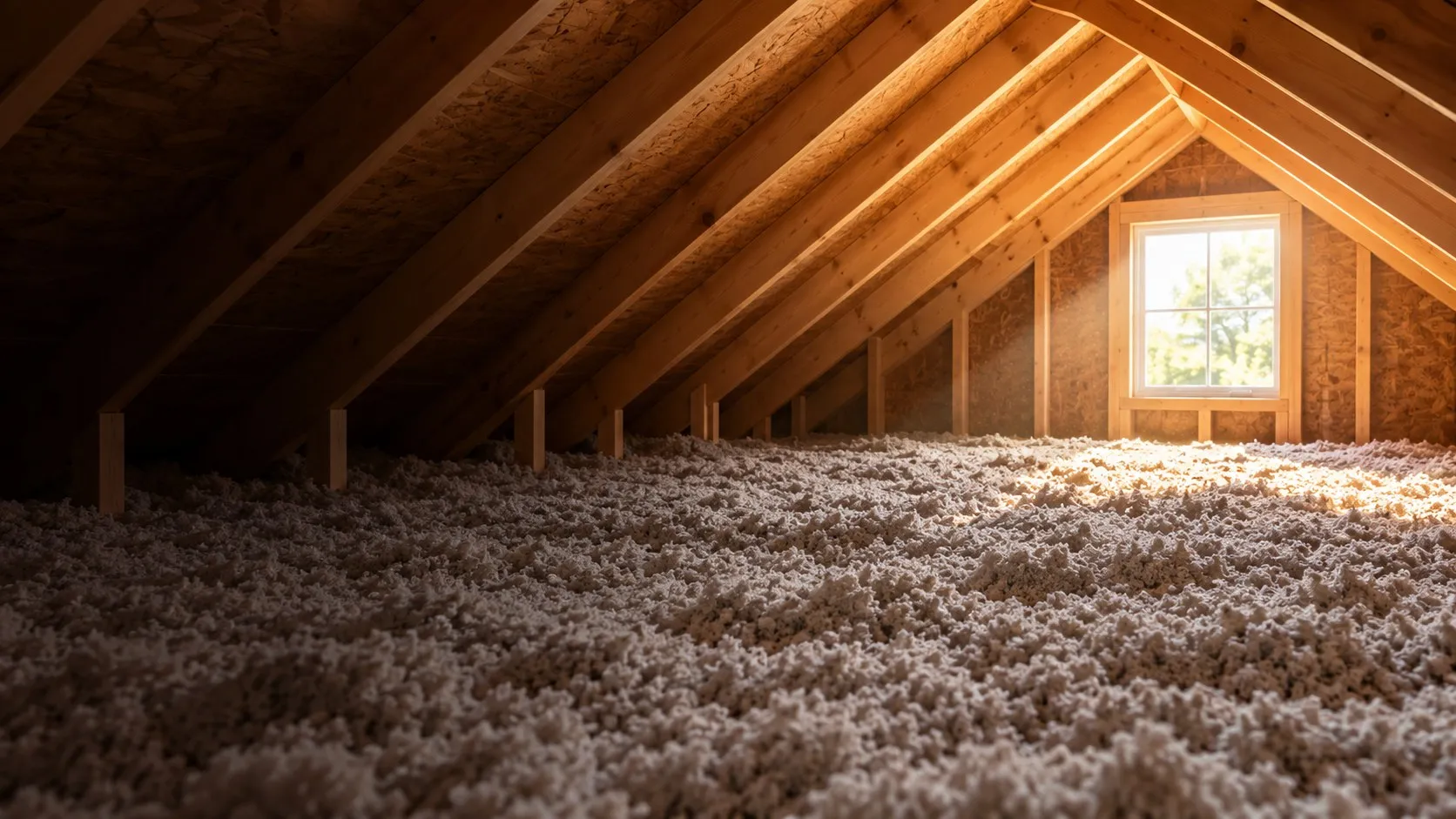
The cheapest R-value in the house, and the usual place to start.
Depth above an attic floor is effectively unlimited, so you are paying for material and almost nothing else. The calculator subtracts whatever is already up there, works to your climate zone target, and gives you a bag count and a shopping list.
- Subtracts the insulation you already have
- Exact bag or package count, with waste
- DIY and installed cost, side by side
- Shows every step of the arithmetic
About a minute. No email, no lead form in front of your answer.
Wall Insulation Calculator
Asks first whether the drywall is up, because that decides everything.
An open wall takes batts, mineral wool, or foam. A finished one takes only what fits through a drilled hole. Sizing is perimeter × height, since nobody knows their total wall square footage, and the result says plainly what a 2x4 cavity can and cannot reach.
- Open framing and drill-and-fill priced apart
- Says when code asks more than the cavity holds
- Vapor retarder guidance for your zone
- Names injection foam where it applies
About a minute. No email, no lead form in front of your answer.
Crawl Space Insulation Calculator
Two genuinely different projects. It recommends one and prices both.
Insulating the floor and sealing the whole space put insulation in different places and cost different money. The recommendation comes with its reasoning visible, and the water, mold, and combustion-safety checks come before the estimate rather than after.
- Encapsulation and vented floor, drawn side by side
- Includes the liner and humidity control code requires
- Flags conditions that mean waiting
- Honours flood-vent requirements
About a minute. No email, no lead form in front of your answer.
Garage Insulation Calculator
Five surfaces, and only two of them change your heating bill.
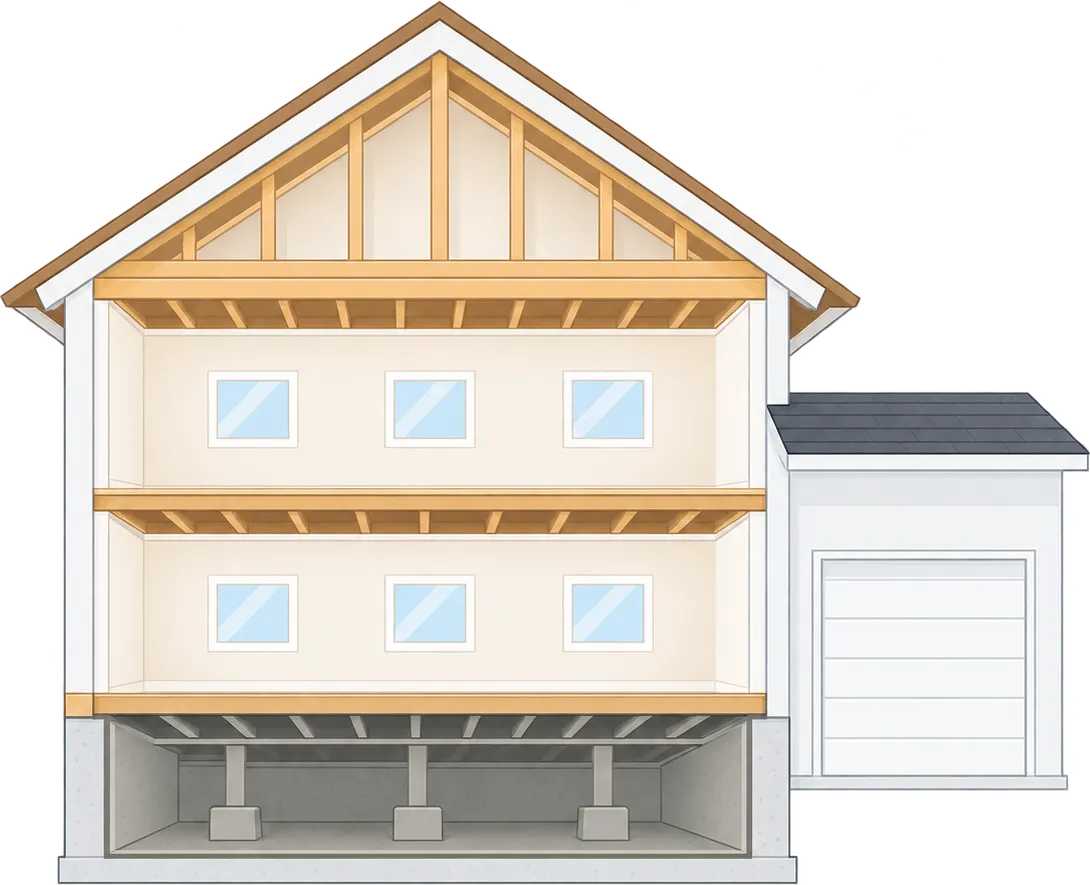
Tap the surfaces on a drawing of your own garage and it works out which ones are actually part of your heated envelope. It includes the drywall the fire code makes you put back, and it will tell you when the honest answer is to skip the job.
- Pick surfaces straight off the drawing
- Fire-separation drywall costed in
- Says when a detached garage is not worth it
- Carbon monoxide warning where sealing applies
About a minute. No email, no lead form in front of your answer.
Choosing by material instead?
Spray Foam Insulation Calculator
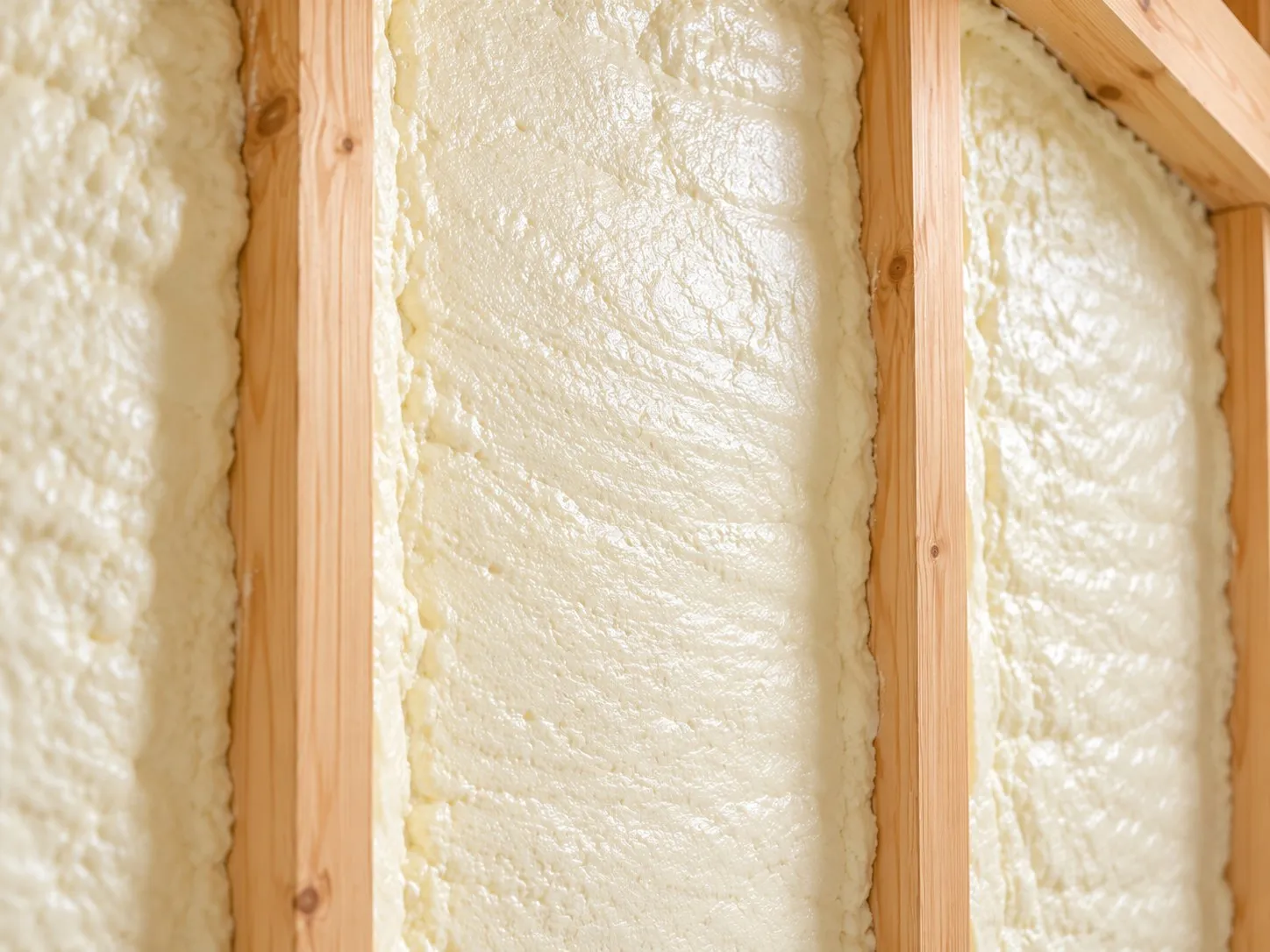
Spray foam is a material rather than a place, so it gets its own tool. It works in board feet — the unit foam is actually quoted in — uses aged R-values rather than day-one marketing figures, and compares DIY kits against installed cost without flattering either.
- Board feet, open and closed cell
- Real-world kit yield, not label yield
- Aged R-value, not day-one
- Ignition and thermal barrier rules
About a minute. No account, no email, no lead form before your results.
What you get at the end
The same thing from every calculator: a target R-value for your climate, what you already have subtracted from it, an exact quantity to buy, both costs, and the arithmetic that produced all of it. Nothing is held back behind an email field.
- Target R-value from your ZIP
- Subtracts what you already have
- Exact bag or package count
- Shows every step of the math
- DIY and professional cost
- Shareable result link
About a minute. No account, no email, no lead form before your results.
Example output
1,240 sq ft attic, 6" existing, climate zone 5
- Target
- R-60
- Need to add
- R-45
- Depth
- 12.9"
- Material
- 52 bags
DIY
$720–$1,300
Professional
$2,050–$4,100
The gear every one of these jobs needs
Whichever calculator you pick, the safety kit and the air sealing are the same. The quantities are what change.
- Essential
Blown-in cellulose
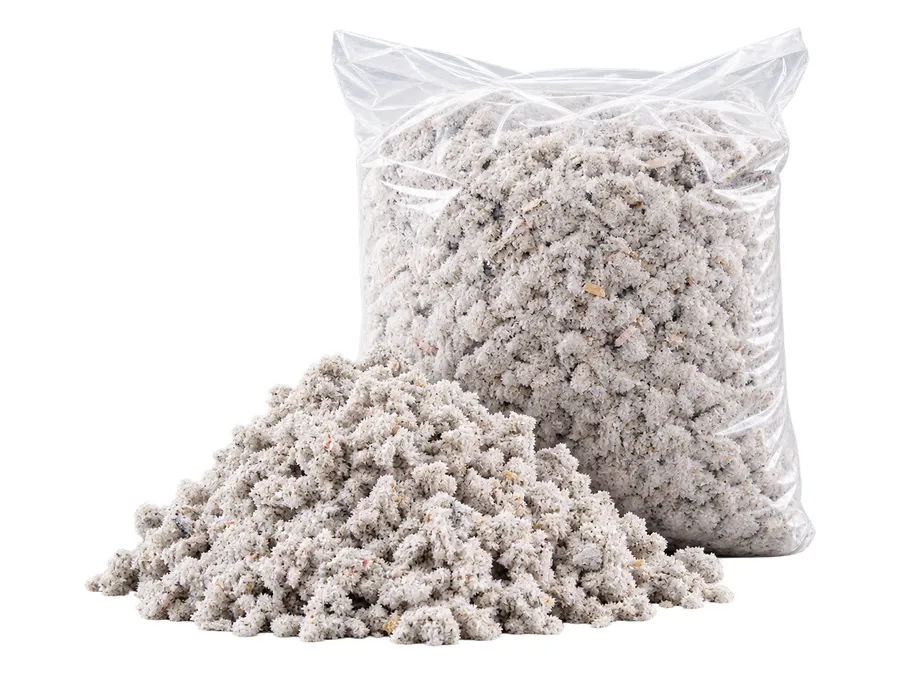
The usual choice for an attic floor. Made largely from recycled paper, it flows into irregular framing and around obstructions that batts leave gapped. Settles about 10–20%, which the calculator already allows for.
- Essential
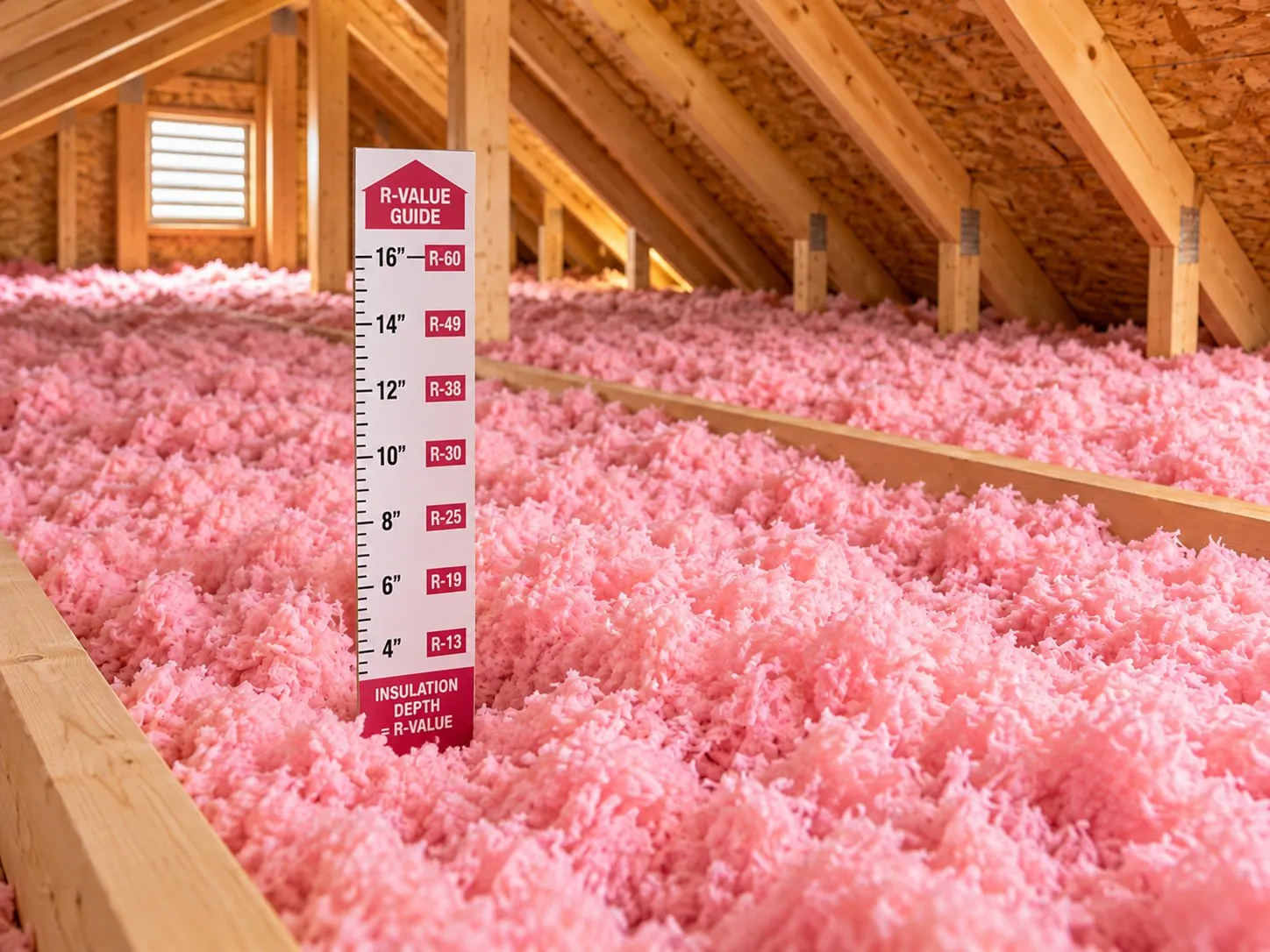
Blown-in fiberglass
Loose fill that does not absorb water and barely settles, which matters on older ceiling framing where the extra weight of cellulose is a consideration. Lower R-value per inch, so it needs more depth for the same target.
- Essential

Fiberglass batts
The easiest entry point: no machine, no hire, and you can do a room at a time. Buy the batt that fits the cavity — compressing an R-19 into a 3½ inch bay gets you about R-13, not R-19.
- Essential
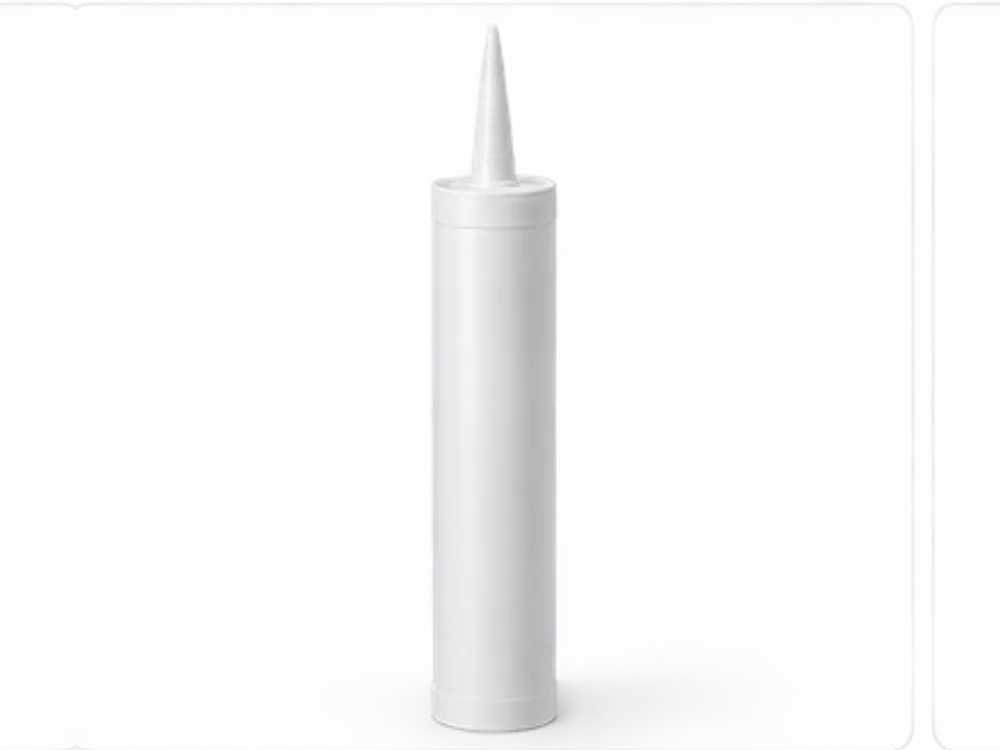
Acoustical or latex sealant
Seals top plates and the smaller gaps expanding foam is too coarse for.
- Essential

Fire-rated expanding foam
Seals gaps around flues, wiring and plumbing penetrations. Fire-rated specifically, because the gaps that leak most are the ones next to heat.
- Essential
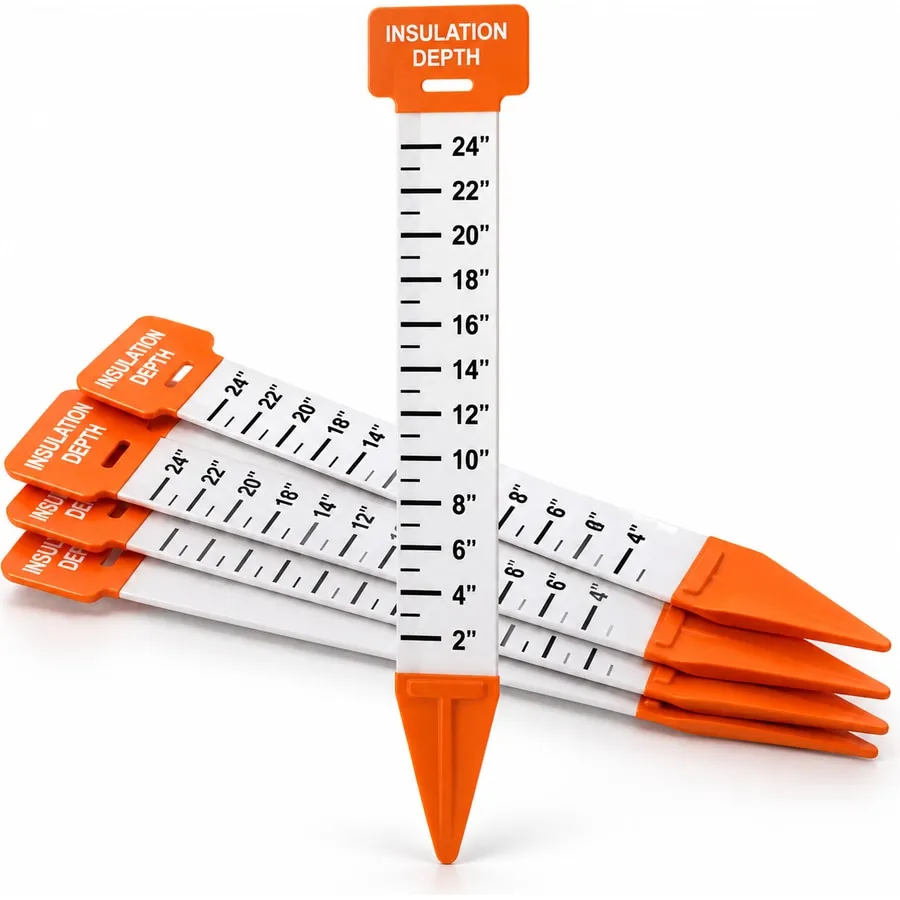
Insulation depth markers
Set to your target depth before you start. Blown insulation looks even when it is not, and this is the only way to know you have hit the R-value you paid for.
- Essential
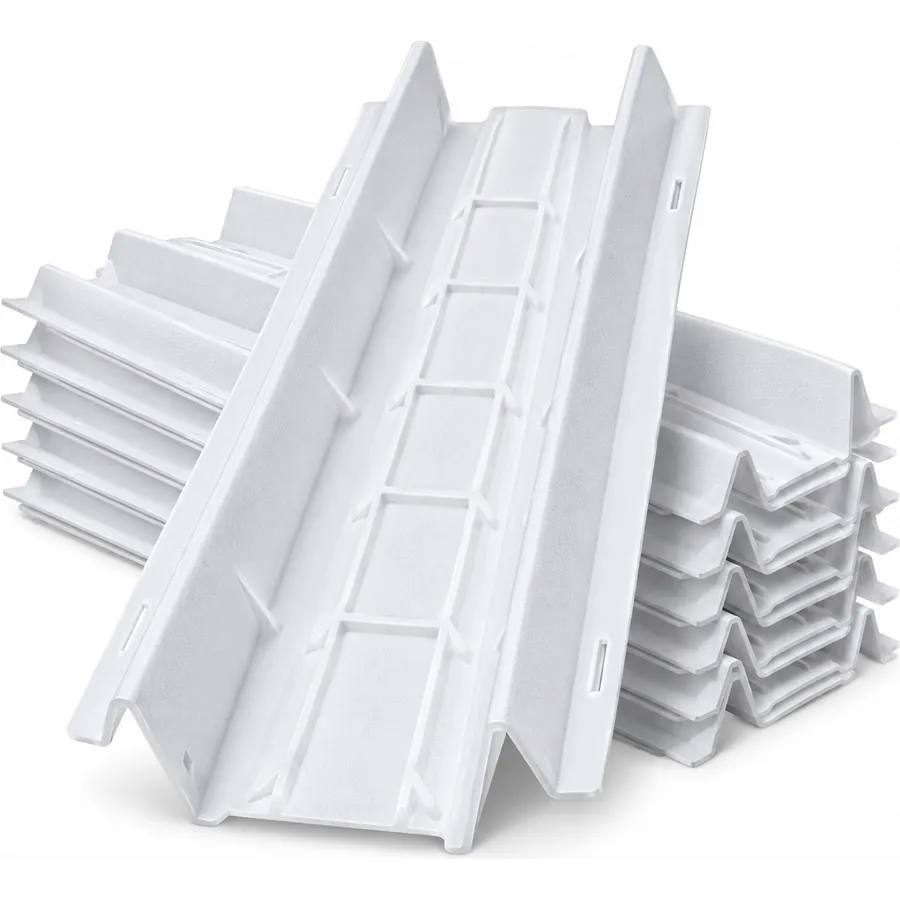
Rafter vent baffles
Keeps the soffit vents clear once insulation is deep enough to block them. Blocked vents cause moisture and ice dams.
- Essential

N95 disposable mask
The minimum for loose fibers and settled attic dust, and the one item never to skip. A surgical or cloth mask filters neither. Disposable, so buy a box rather than one.
- Essential

Sealed safety goggles
Sealed rather than open-sided, because you will be working below the material and looking up into it.
- Essential

Work gloves
Fiberglass irritates skin on contact and the fibers are hard to wash out afterwards.
Retailer buttons open a search at that store — exact products and pack sizes vary by location.
Affiliate links — we may earn a commission if you purchase through these links, at no extra cost to you. As an Amazon Associate I earn from qualifying purchases. Products are chosen on whether they suit the job, never on commission. Full disclosure.
Reference and guides
Climate zone map
Find your zone and its targets.
What R-value do I need?
Targets by zone and assembly.
R-value chart
Every material, ranked per inch.
How much do I need?
The full calculation, worked through.
Insulation cost
Per square foot by material.
How to insulate an attic
The nine-step walkthrough.
Fiberglass vs cellulose
The decision most people face.
Our methodology
Every assumption, with sources.