Short answer: for an attic, R-49 in the warmest US climates and R-60 almost everywhere else. Walls are R-13 to R-21 depending on zone. Find your zone in the table below for the specific number.
What R-value actually measures
R-value measures resistance to heat flow. Higher is better, and it is additive — two inches of R-3.5-per-inch material gives you R-7.
Two things about it are widely misunderstood. First, R-value only describesconduction: heat moving through the material. It says nothing about air leaking around it, which in a typical house accounts for a large share of heat loss. That is why air sealing before insulating matters so much.
Second, the R-value on the bag is a laboratory figure for perfectly installed material. Real installed performance is usually lower — gaps, compression, and heat travelling through framing all reduce it. A carefully installed R-38 often outperforms a sloppily installed R-49.
Recommended R-value by climate zone
These follow US Department of Energy and ENERGY STAR recommendations for existing homes. Your local building code may require more. Select your state to see its targets:
Hover or select a state on the map — or enter a ZIP code — to see the recommended R-values for that climate zone.
Zones follow the IECC climate zone map. Each state is shown in its most populous zone; nine states span three or more. For a precise answer, use the ZIP lookup or check with your local building department.
| Zone | Example cities | Attic | Walls | Floor |
|---|---|---|---|---|
| Zone 1 | Miami, Honolulu, Key West | R-49 | R-13 | R-13 |
| Zone 2 | Houston, Phoenix, Orlando, New Orleans | R-60 | R-13 | R-13 |
| Zone 3 | Atlanta, Dallas, Los Angeles, Charlotte | R-60 | R-20 | R-19 |
| Zone 4 | Washington DC, Nashville, Portland, Kansas City | R-60 | R-20 | R-25 |
| Zone 5 | Chicago, Denver, Boston, Salt Lake City | R-60 | R-20 | R-30 |
| Zone 6 | Minneapolis, Burlington, Helena | R-60 | R-21 | R-30 |
| Zone 7 | Duluth, Fargo, Fairbanks | R-60 | R-21 | R-38 |
If you are unsure of your zone, it broadly tracks winter severity: Zone 1 is southern Florida and Hawaii, Zone 7 is northern Minnesota and Alaska. Several states span three zones, so a state-level guess is only a starting point.
Why different parts of the house need different numbers
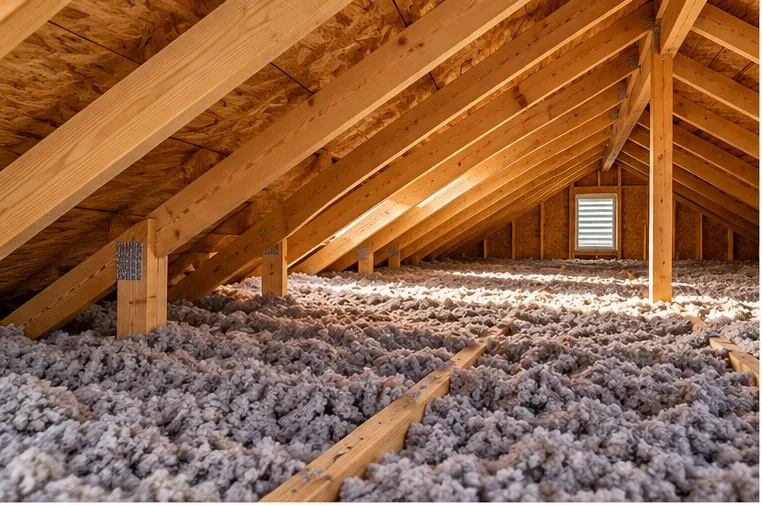
Attic
Unlimited depth, so the highest targets and the cheapest R-value per dollar.
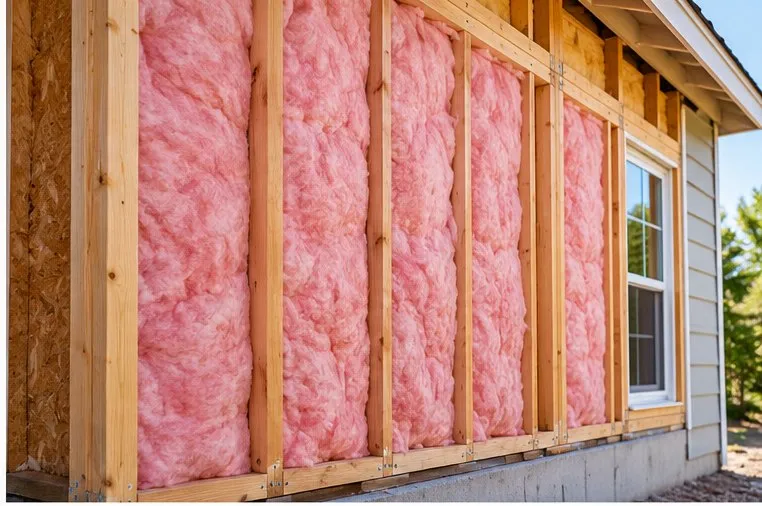
Walls
Capped by cavity depth — a 2x4 wall tops out near R-15 with conventional material.
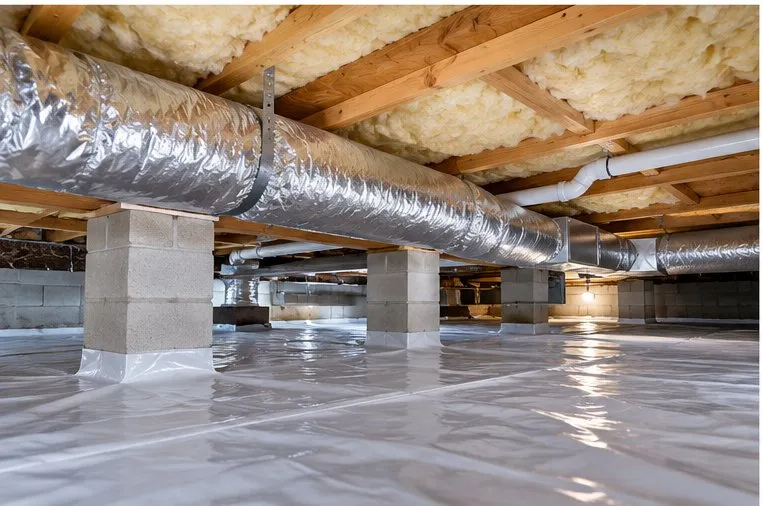
Floor over crawl space
Matters most where the space below is vented and genuinely cold.
Attics get the highest targets for two reasons. Heat rises, so the ceiling is where most of it leaves in winter. And attic insulation is cheap per unit of R-value — there is nothing but open space above the joists, so adding depth costs almost nothing beyond the material itself.
Walls get lower targets because they are depth-limited. A 2x4 wall cavity is 3.5 inches, which caps you at roughly R-13 to R-15 with conventional material regardless of ambition. Getting beyond that means continuous exterior foam or deeper framing — a renovation, not a retrofit.
Floors over unconditioned space sit in between, and matter most where the space below is genuinely cold — a vented crawl space or an unheated garage.
Adding to insulation that's already there
You need the difference, not the full target. If you have R-19 and want R-60, you need to add R-41 — not R-60.
To estimate what you have, measure the depth with a ruler and identify the material:
- Gray, shredded, paper-like — cellulose, roughly R-3.1 per inch
- Fluffy white or pale yellow, loose — blown fiberglass, roughly R-2.3 per inch
- Pink or yellow rolls between joists — fiberglass batts, roughly R-3.0 per inch
- Small gray-brown pellets — vermiculite. Stop. It may contain asbestos; have it tested before disturbing it
Use rates slightly below the nominal ratings. Twenty-year-old insulation has settled and been walked on, and assuming it performs as new will leave you short.
Why more is not always better
R-value has sharply diminishing returns, and this is the single most useful thing to understand before spending money.
Going from R-0 to R-15 eliminates about 93% of conductive heat loss through that assembly. Going from R-15 to R-30 eliminates half of what remains — about 3% of the original. From R-30 to R-60 gets you another 1.5%.
So the first few inches do nearly all the work. Once you are at or above the recommended level for your zone, additional depth is rarely the best use of the next dollar. Air sealing, duct sealing, or window repair will usually do more.
This is also why the calculator tells you when you already have enough, rather than recommending more anyway.
Converting R-value into inches
How deep your target translates to depends entirely on material:
| Material | R per inch | R-38 | R-49 | R-60 |
|---|---|---|---|---|
| Blown cellulose | 3.5 | 10.9" | 14.0" | 17.1" |
| Blown fiberglass | 2.5 | 15.2" | 19.6" | 24.0" |
| Fiberglass batts | 3.2 | 11.9" | 15.3" | 18.8" |
| Mineral wool | 4.0 | 9.5" | 12.3" | 15.0" |
| Open-cell foam | 3.6 | 10.6" | 13.6" | 16.7" |
| Closed-cell foam | 6.5 | 5.8" | 7.5" | 9.2" |
Check that the depth actually fits. R-60 in blown fiberglass is two feet deep, which will bury the joists entirely and may not clear a low roofline at the eaves.
Next
- Full R-value chart — every material, thickness, and typical application
- How much insulation do I need? — converting R-value into bags
- Attic insulation cost — what hitting these targets costs
- Our methodology — where these numbers come from