At a glance
Fiberglass Insulation
| Fiberglass batts | Blown fiberglass | |
|---|---|---|
| R-value per inch | R-3.2 | R-2.5 |
| Depth for R-30 | 9.5" | 12" |
| Material onlyper sq ft at R-30 | $0.39–$0.72 | $0.33–$0.54 |
| Installedper sq ft at R-30 | $0.90–$2.10 | $1.05–$2.04 |
| Sold as | Batt packs | Bags |
Batts need no equipment at all, which makes them the easiest entry point — you can do an attic in stages over several weekends. Blown fiberglass needs a rented machine, same as cellulose.
Quantity and cost for your own square footage and climate zone.
Where to buy
R-value and depth
Fiberglass Insulation delivers Batts R-3.1–R-3.4 per inch; blown R-2.2–R-2.7 per inch. Because R-value accumulates with thickness, the depth you need depends entirely on your target — and your target depends on your climate zone. Blown: about 24 inches for R-60. Batts: R-38 batts are 12 inches.
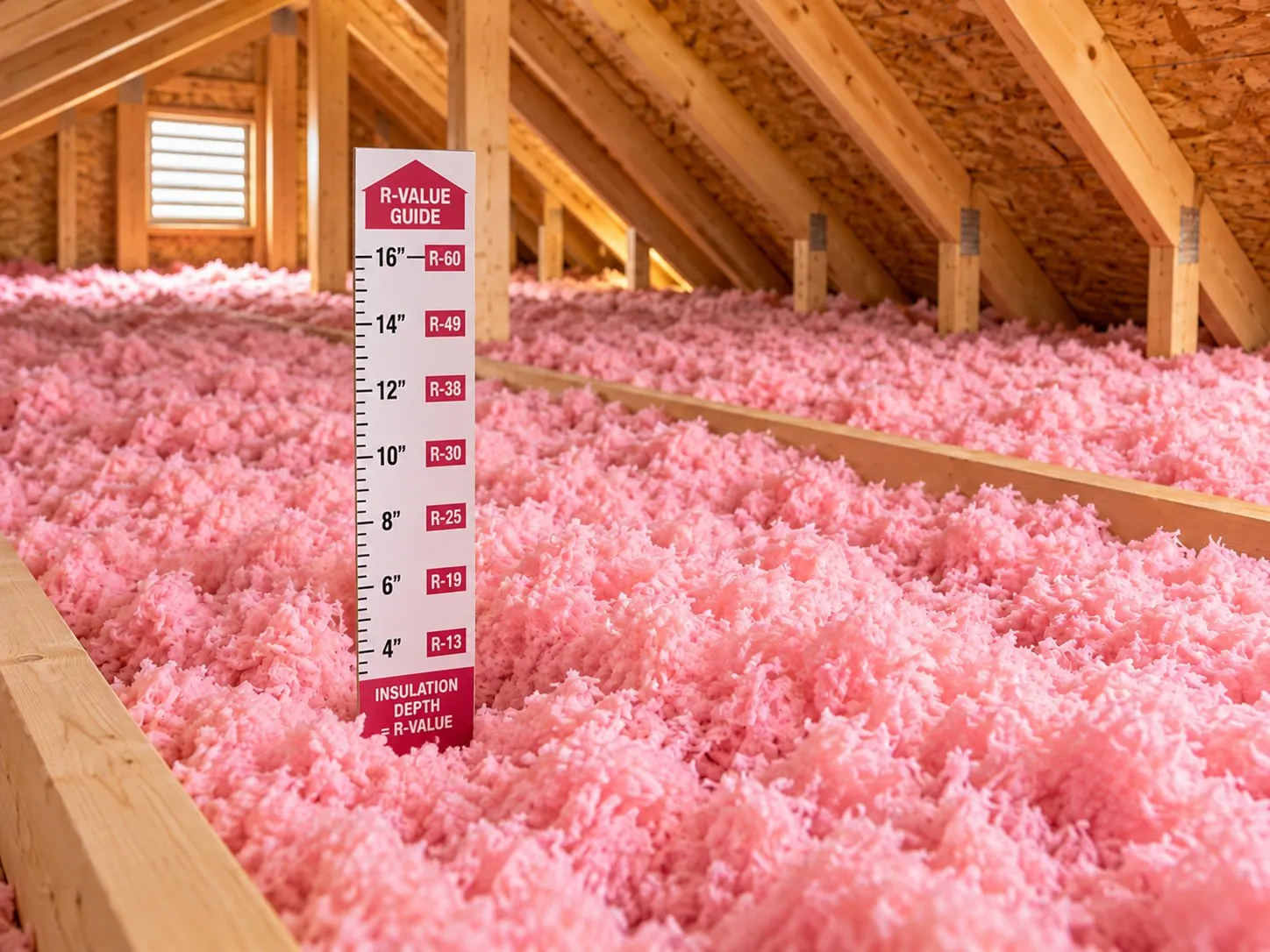
Depth is the only thing that determines whether you actually hit your target R-value, which is why it is worth setting depth markers before you start rather than judging by eye.
How deep it has to go
Installed depth to reach each target R-value. Drawn to scale.
Fiberglass battsR-3.2 per inch
- R-30
- 9.5"
- R-38
- 12"
- R-49
- 15.5"
- R-60
- 19"
Blown fiberglassR-2.5 per inch
- R-30
- 12"
- R-38
- 15"
- R-49
- 19.5"
- R-60
- 24"
Nominal depths at the rated R-value per inch. Loose fill is installed deeper than its settled depth, and your own target depends on your climate zone — the calculator works both out for your attic.
Where it belongs
The most useful thing to know about any insulation material is not its R-value — it is which jobs it suits and which it quietly fails at.
Works well here
- Open joist and stud cavities at standard 16" or 24" spacing
- Attics where weight is a concern on older ceiling framing
- Anywhere occasional dampness is possible — it does not hold water
- Budget-constrained projects, since it is consistently the cheapest option
Wrong choice here
- Cavities full of wiring, pipes, or blocking, where cutting batts around obstructions destroys performance
- Very cold attics at shallow depths — loose fiberglass loses performance below about 20°F if not deep enough
- Situations where you need air sealing; fiberglass is air-permeable and does nothing to stop leaks
Moisture
Fiberglass does not absorb water into the fibers, so it recovers from a leak once dried out. It does not stop moisture moving through it, though, so in cold climates a vapor retarder on the warm side may be needed. Never install faced batts on top of existing insulation — the trapped second vapor barrier is where condensation collects.
Cost
Material alone, $0.39–$0.72 per sq ft at R-30 (batts). Professionally installed, $0.90–$2.10 per sq ft at R-30 — the difference is labor, equipment, and disposal.
Costs scale with R-value, not just floor area, so doubling your target roughly doubles the material cost. National ranges are wide because local labor rates and attic access vary enormously. See how we calculate these figures.
Installation
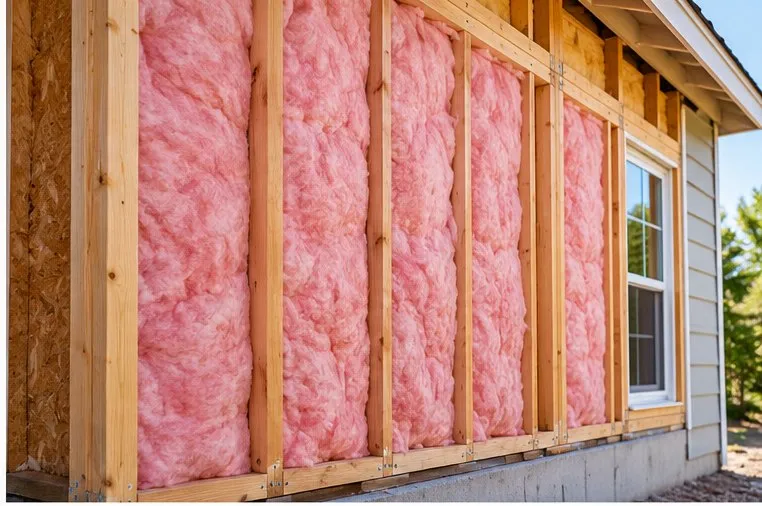
Batts are friction-fit between joists, cut slightly oversized, and must sit without compression — compressing a batt to fit reduces its R-value proportionally. For attic floors, run a second layer perpendicular to the joists to cover the thermal bridge the framing creates. Blown fiberglass installs exactly like cellulose.
Advantages and limitations
Advantages
- Cheapest option per R-value by a clear margin
- Does not absorb water, so a roof leak is a drying problem rather than a replacement
- Batts need no tools beyond a knife, and no equipment rental
- Non-combustible and does not provide food value to pests
Limitations
- Installed performance depends heavily on installation quality — gaps and compression can cut effective R-value by a third
- Blown fiberglass has the lowest R-value per inch of any common material, so it needs the most depth
- Fibers irritate skin, eyes, and airways; full PPE is required
- Batts almost never fit obstructed cavities well
Lifespan
Fiberglass does not decompose and holds its R-value indefinitely when dry and undisturbed. Batts can sag out of cavities over decades, particularly in walls, and compressed or displaced batts stop performing long before they wear out.
Batts or blown?
Blown fiberglass suits attics with obstructions and gives more consistent coverage; batts suit clean, regularly spaced cavities and need no equipment. For an attic floor retrofit over existing insulation, blown is almost always the better result.