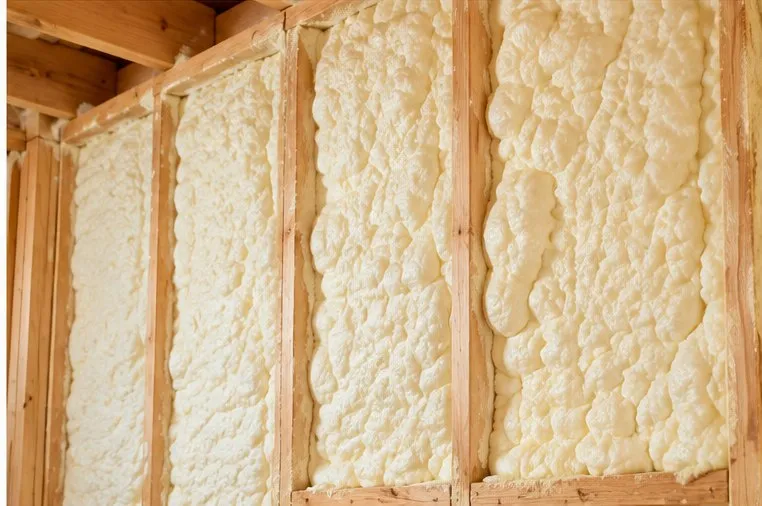
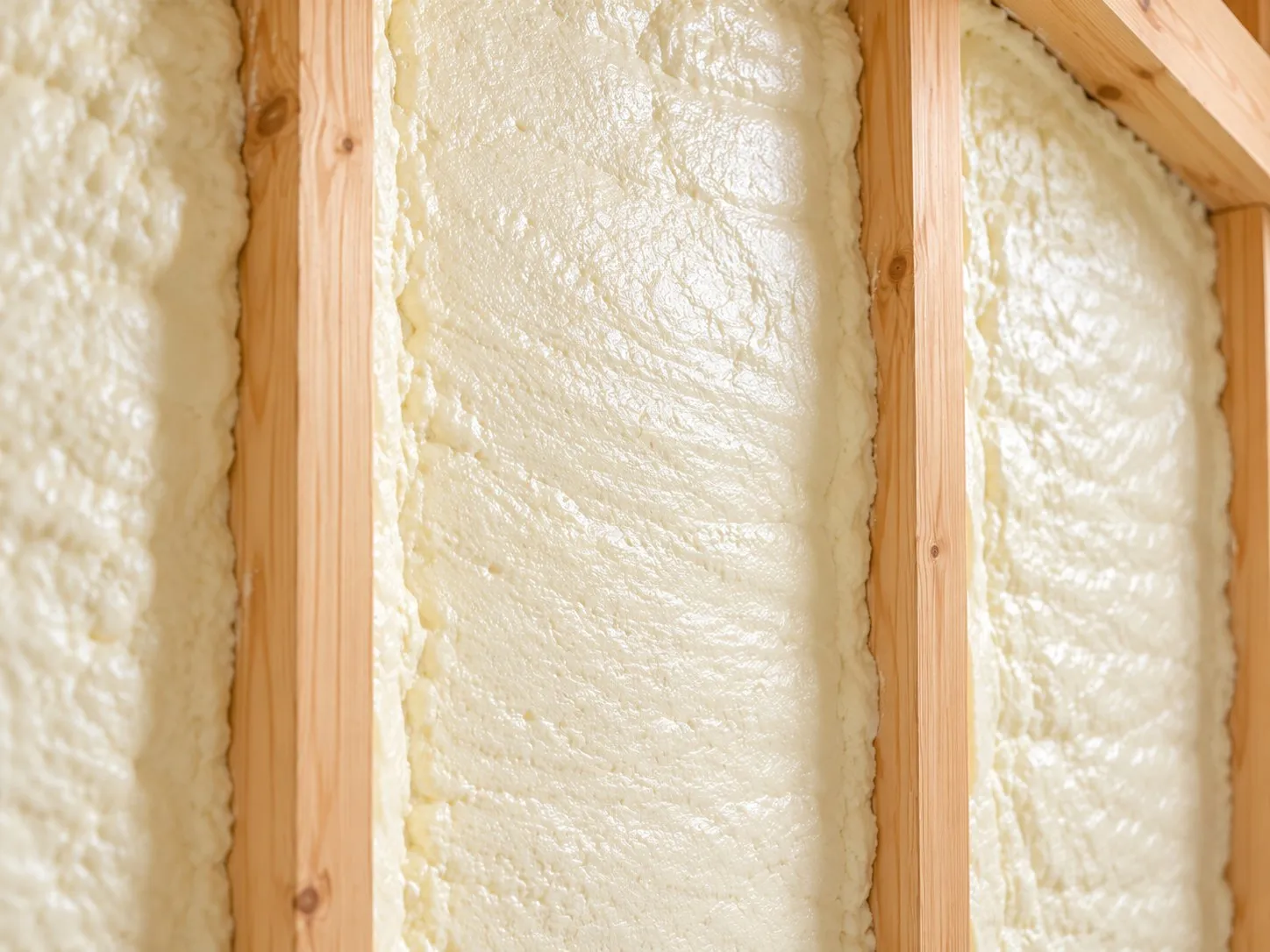
At a glance
Spray Foam Insulation
| Open-cell foam | Closed-cell foam | |
|---|---|---|
| R-value per inch | R-3.6 | R-6.5 |
| Depth for R-30 | 8.5" | 4.5" |
| Material onlyper sq ft at R-30 | $3.60–$6.00 | $4.50–$7.80 |
| Installedper sq ft at R-30 | $3.90–$6.60 | $4.80–$8.40 |
| Sold as | Sprayed on site | Sprayed on site |
Two-part kits exist but we do not recommend them for anything beyond small rim-joist work. The chemistry is temperature-sensitive, the mix ratio has to stay correct, and badly applied foam off-gasses, fails to cure, or has to be physically cut out. Per board foot, DIY kits often cost more than hiring a professional.
Board feet and installed cost for your own area — then take the figure to your quotes.
R-value and depth
Spray Foam Insulation delivers Open-cell R-3.5–R-3.8; closed-cell R-6.0–R-7.0 per inch. Because R-value accumulates with thickness, the depth you need depends entirely on your target — and your target depends on your climate zone. Closed-cell reaches R-30 in under 5 inches; open-cell needs about 8.
Depth is the only thing that determines whether you actually hit your target R-value, which is why it is worth setting depth markers before you start rather than judging by eye.
How deep it has to go
Installed depth to reach each target R-value. Drawn to scale.
Open-cell foamR-3.6 per inch
- R-30
- 8.5"
- R-38
- 10.5"
- R-49
- 13.5"
- R-60
- 16.5"
Closed-cell foamR-6.5 per inch
- R-30
- 4.5"
- R-38
- 6"
- R-49
- 7.5"
- R-60
- 9"
Nominal depths at the rated R-value per inch. Loose fill is installed deeper than its settled depth, and your own target depends on your climate zone — the calculator works both out for your attic.
Where it belongs
The most useful thing to know about any insulation material is not its R-value — it is which jobs it suits and which it quietly fails at.
Works well here
- Rim joists and band joists, where air sealing matters most and areas are small
- Crawl-space walls in an encapsulated crawl space (closed-cell)
- Cathedral ceilings and roof decks where you are insulating at the roofline
- Irregular cavities where nothing else seals properly
Wrong choice here
- Standard vented attic floors — conventional insulation costs a fraction and performs as well
- Anywhere you may need future access to wiring or plumbing in the cavity
- Roof decks where you need to spot a leak early; foam hides water travel
- Homes where the budget would be better spent on air sealing plus deeper conventional insulation
Moisture
Closed-cell foam is a vapor retarder at about 2 inches, which is exactly what you want on a crawl-space wall and exactly what you do not want where an assembly needs to dry in both directions. Open-cell is vapor-open and will let moisture through to the roof deck, which causes rot in cold climates unless the assembly is designed for it. This is the decision most worth getting professional advice on.
Cost
Material alone, DIY kits $1.00–$2.00 per board foot — poor value versus pro pricing. Professionally installed, Open-cell $0.45–$0.75, closed-cell $1.00–$1.50 per board foot — the difference is labor, equipment, and disposal.
Put on the same basis as the other materials — covering a square foot to R-30 — that is $3.60–$7.80 in material and $3.90–$8.40 installed. That is the figure in the panel above, and the one the calculator works in.
Costs scale with R-value, not just floor area, so doubling your target roughly doubles the material cost. National ranges are wide because local labor rates and attic access vary enormously. See how we calculate these figures.
Installation
Applied by a licensed contractor in lifts, with respirators and full protection. The house is typically unoccupied for 24–48 hours. Get written confirmation of the product, target thickness, and cure time, and ask how thickness will be verified — under-thickness is the most common way spray foam jobs go wrong, and it is invisible once the crew leaves.
Advantages and limitations
Advantages
- Air seals and insulates in one operation, eliminating a separate sealing step
- Closed-cell delivers the highest R-value per inch available, which matters in depth-limited assemblies
- Closed-cell acts as its own vapor retarder and adds structural rigidity
- Conforms perfectly to irregular surfaces
Limitations
- Three to five times the installed cost of blown insulation for the same R-value
- Installation quality is critical and problems are expensive to remedy
- Requires vacating the house during installation and curing
- Permanent — removal means cutting it out
- Open-cell is vapor-permeable and wrong for some assemblies, notably unvented roof decks in cold climates
Lifespan
Properly cured foam lasts the life of the building without settling or losing R-value. Improperly mixed foam is a different matter — it can remain tacky, shrink away from framing, or off-gas persistently, and the only fix is removal.
Open-cell or closed-cell?
Open-cell is cheaper, more vapor-permeable, and good for interior applications and sound. Closed-cell costs more but gives roughly double the R-value per inch, blocks vapor, and is the right choice below grade and at rim joists.