Short answer
Closed-cell below grade, at rim joists, and anywhere depth is limited. It delivers nearly double the R-value per inch, blocks vapor, and tolerates contact with damp masonry.
Open-cell for interior walls, sound, and assemblies that need to dry. It costs roughly half as much per board foot and lets moisture pass, which is sometimes exactly what you want and sometimes a serious mistake.
The deciding factor is almost never R-value or price. It is which direction the assembly needs to dry in.
Side by side
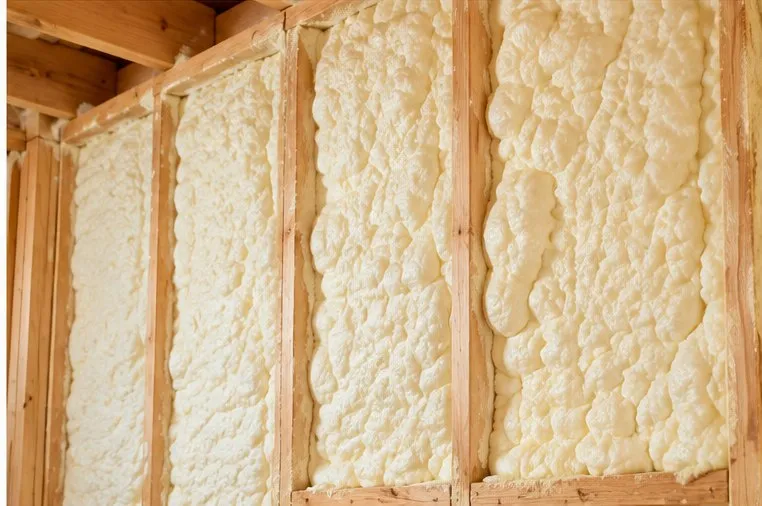 Open-cell
 foam
- R per inch
- 3.6
- Installed
- $0.45 – $0.75 / bd ft
- Density
- ~0.5 lb/ft³
- Vapor
- Permeable
- Expands far more, filling irregular cavities completely
- Lets assemblies dry inward — useful in many wall designs
- Markedly better sound absorption
- Water passes through, so a roof leak still shows up
Choose this when: Interior walls, sound control, and vented attics where drying matters.
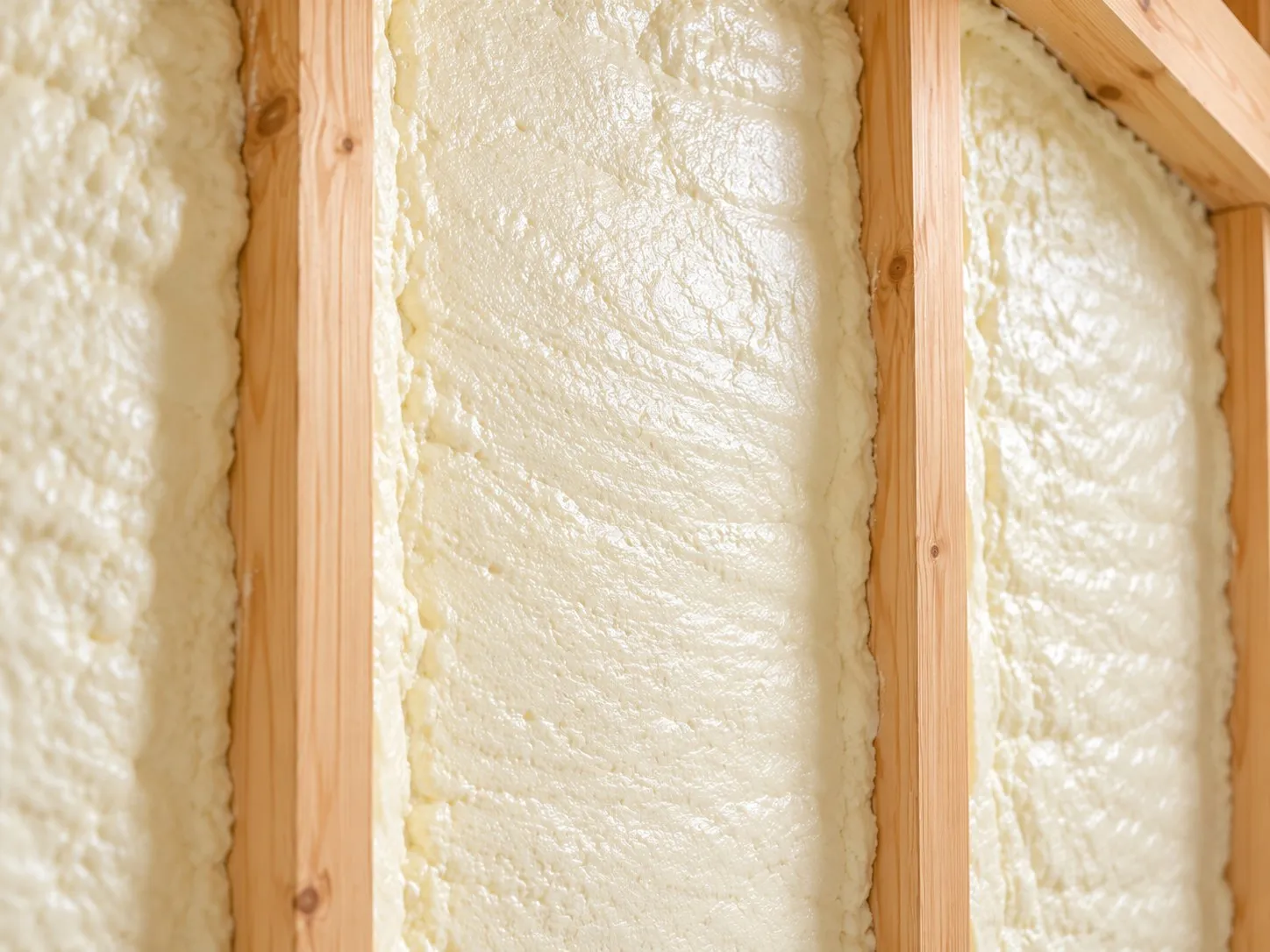 Closed-cell
 foam
- R per inch
- 6.5
- Installed
- $1.00 – $1.50 / bd ft
- Density
- ~2.0 lb/ft³
- Vapor
- Retarder at 2 inches
- Nearly double the R-value in the same depth
- Its own vapor retarder — no separate membrane needed
- Adds measurable racking strength to the assembly
- The only foam appropriate below grade
Choose this when: Crawl-space walls, rim joists, basements, and depth-limited assemblies.
Attribute by attribute
| Attribute | Open-cell | Closed-cell | Advantage |
|---|---|---|---|
| R-value per inch | R-3.5 – R-3.8 | R-6.0 – R-7.0 | Closed-cell |
| Installed cost | $0.45 – $0.75 / bd ft | $1.00 – $1.50 / bd ft | Open-cell |
| Cost per sq ft at R-20 | $2.50 – $4.20 | $3.10 – $4.60 | Open-cell |
| Density | ~0.5 lb/ft³ | ~2.0 lb/ft³ | Depends |
| Vapor permeability | Permeable — assemblies can dry | Retarder at 2" | Depends |
| Adds structural rigidity | No | Yes | Closed-cell |
| Expansion | Large — fills irregular cavities | Modest | Open-cell |
| Sound absorption | Good | Poor | Open-cell |
| Below grade / contact with water | No | Yes | Closed-cell |
| Shows a roof leak early | Water passes through | Hides it | Open-cell |
The vapor question
This is the part that matters and the part most comparisons skip.
Closed-cell is a vapor retarder at about two inches. Moisture cannot pass through it. On a crawl-space wall that is exactly right — you want to stop ground moisture reaching the conditioned space. In a wall assembly designed to dry inward, it is wrong, because you have sealed the path.
Open-cell is vapor-open. Moisture moves through it freely. In an unvented roof assembly in a cold climate, warm interior air carries moisture through the foam to the cold underside of the roof deck, where it condenses. That is how roof decks rot. Building codes in colder zones restrict this for exactly that reason.
There is a genuine benefit to that permeability though: if the roof leaks, water comes through and you find out. With closed-cell the leak can travel sideways and show up somewhere unrelated, months later.
This is the decision to get professional advice on
Vapor behavior depends on your climate zone, the assembly, and what is already in the wall. It is the one insulation choice where a reasonable-sounding decision can cause structural damage years later. A contractor who cannot explain which way your assembly dries is not the contractor for a foam job.
Which one, where
| Assembly | Use | Why |
|---|---|---|
| Rim / band joist | Closed-cell | Small area, high leakage, needs a vapor retarder |
| Crawl-space walls | Closed-cell | Below grade, contact with damp masonry |
| Basement walls | Closed-cell | Same reasoning as crawl space |
| Unvented roof deck, cold climate | Closed-cell | Open-cell lets moisture reach cold sheathing |
| Interior partition walls | Open-cell | Sound is the goal; no moisture concern |
| Cathedral ceiling, mild climate | Either | Depends on assembly and local code |
| Vented attic floor | Neither | Blown insulation does the same job for a fraction |
That last row matters. For a standard vented attic floor, spray foam is the wrong tool at any density. Air sealing plus deeper blown insulation reaches the same R-value for a third of the cost.
Cost in practice
Foam is quoted per board foot — one square foot at one inch thick. Board feet = area × thickness.
Because closed-cell delivers nearly double the R per inch, you need roughly half the thickness for the same target. That closes much of the price gap: at R-20, open-cell is $2.50–$4.20 per square foot and closed-cell $3.10–$4.60. Closed-cell is more expensive, but not the 2× its per-board-foot price suggests.
Where the gap stays wide is thick applications. At R-40 in a roof assembly, the open-cell volume becomes substantial and the cost advantage returns.