Quick numbers
| Open-cell | Closed-cell | |
|---|---|---|
| Per board foot, installed | $0.45–$0.75 | $1.00–$1.50 |
| R per inch | 3.6 | 6.5 |
| Per sq ft at R-20 | $2.50–$4.20 | $3.10–$4.60 |
| Vapor retarder? | No | Yes, at 2"+ |
| Adds structural rigidity? | No | Yes |
Board feet, and why foam is quoted that way
A board foot is one square foot at one inch thick. Foam is priced this way because thickness varies across a job in a way it doesn't with batts.
Board feet = area in sq ft × thickness in inches
A 500 sq ft crawl space wall at 2 inches of closed-cell is 1,000 board feet — roughly $1,000–$1,500 installed.
When comparing quotes, check they specify the same thickness. Under-applying thickness is the most common way foam jobs go wrong, and it's invisible once the crew leaves.
Which one you need
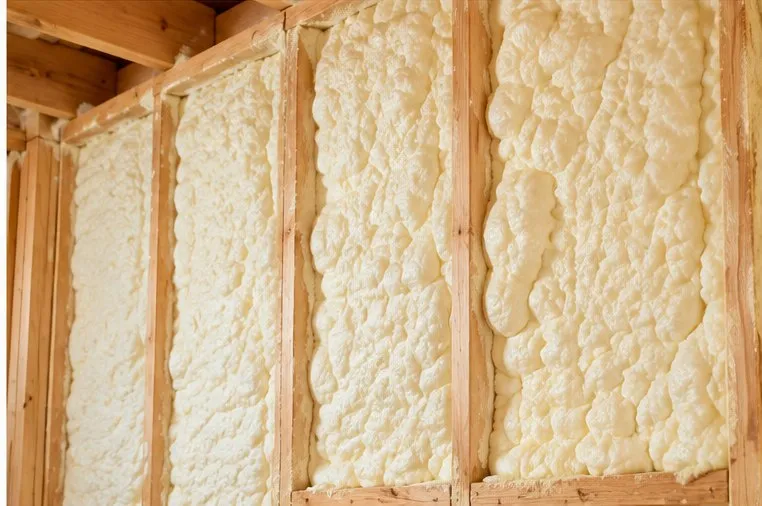 Open-cell
 foam
- R per inch
- 3.6
- Installed
- $0.45–$0.75 / bd ft
- Per sq ft at R-20
- $2.50–$4.20
- Vapor retarder
- No
- Expands further, filling irregular cavities
- Vapor-open, so assemblies can dry
- Better sound absorption than closed-cell
- Roughly half the cost per board foot
Choose this when: Interior walls, sound control, and cavities that need to dry inward.
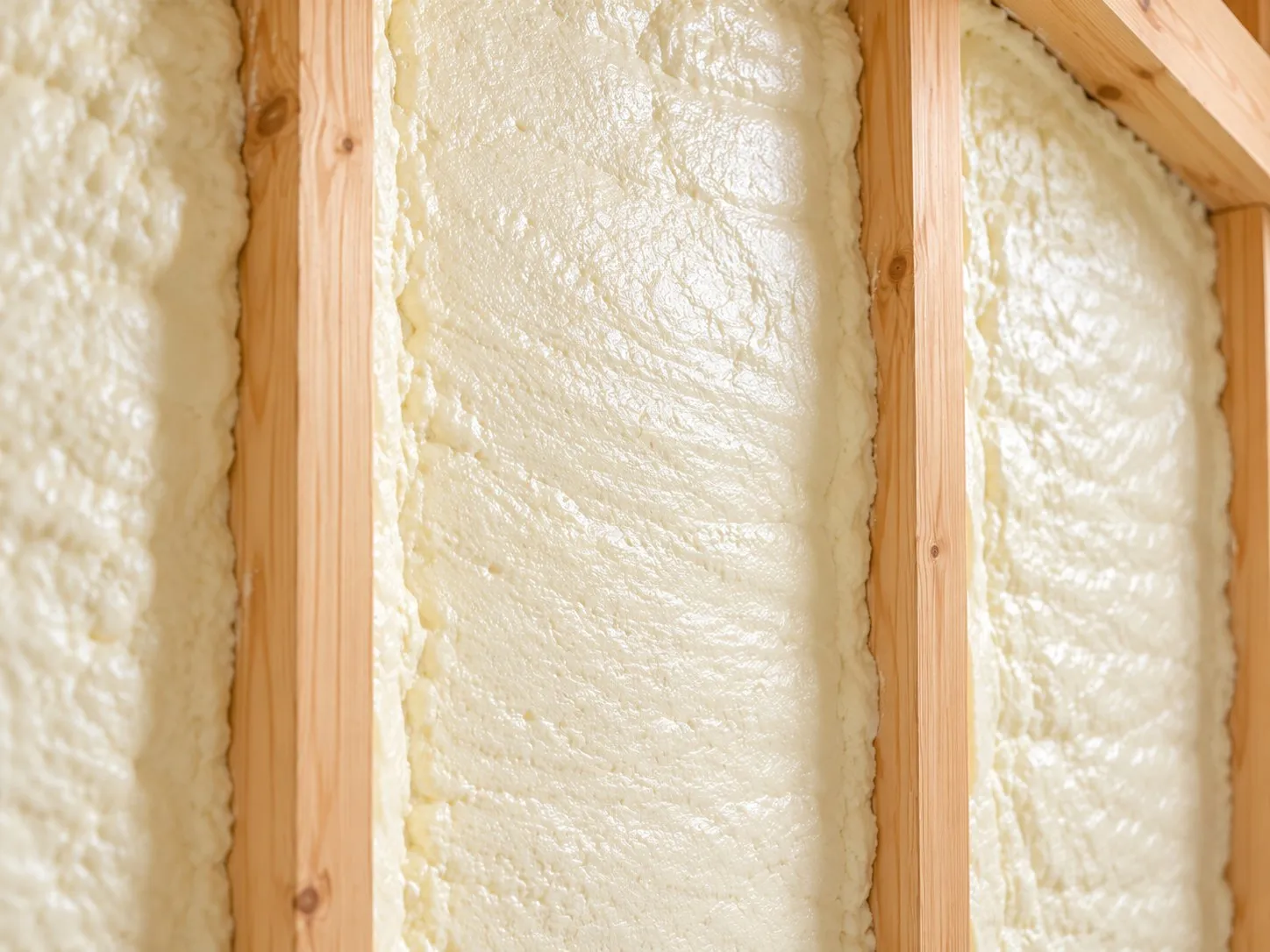 Closed-cell
 foam
- R per inch
- 6.5
- Installed
- $1.00–$1.50 / bd ft
- Per sq ft at R-20
- $3.10–$4.60
- Vapor retarder
- Yes, at 2 inches
- Nearly double the R-value per inch
- Acts as its own vapor retarder
- Adds structural rigidity to the assembly
- Handles below-grade and rim joists
Choose this when: Crawl-space walls, rim joists, and anywhere depth is limited.
Open-cell is cheaper, expands more, and is vapor-permeable — so assemblies can dry. Good for interior walls, sound control, and irregular cavities. Wrong for below-grade, and risky on unvented roof decks in cold climates where moisture reaching the sheathing causes rot.
Closed-cell costs more but delivers nearly double the R-value per inch, blocks vapor, and adds rigidity. It's the correct choice for crawl-space walls, rim joists, and anywhere depth is limited.
This choice has real building-science consequences, and it's the part most worth getting professional advice on rather than deciding from a price list.More on the differences.
Why DIY kits rarely pay
Two-part kits are sold at roughly $1.00–$2.00 per board foot — often more than a professional charges installed, because contractors buy chemicals in bulk.
The failure modes are also expensive:
- Chemicals are temperature-sensitive; foam applied outside the window may never cure properly
- Off-ratio mixing produces foam that stays tacky and off-gasses persistently
- Uncured or shrunken foam has to be physically cut out
- Proper respiratory protection is required, not optional
Kits do make sense for one thing: rim joists. Small area, high leakage, closed-cell is the right material, and a single kit covers a typical basement perimeter.
When foam is worth the premium
Foam earns its cost in specific situations, not as a default:
- Depth-limited assemblies — cathedral ceilings, 2x4 walls where you need more R than will fit
- Rim and band joists — small area, disproportionate air leakage
- Encapsulated crawl spaces — closed-cell handles moisture that would ruin fibrous insulation
- Insulating at the roofline — bringing ductwork inside the thermal envelope
For a standard vented attic floor, foam is the wrong tool. Air sealing plus deeper blown insulation achieves the same result for a fraction of the cost.