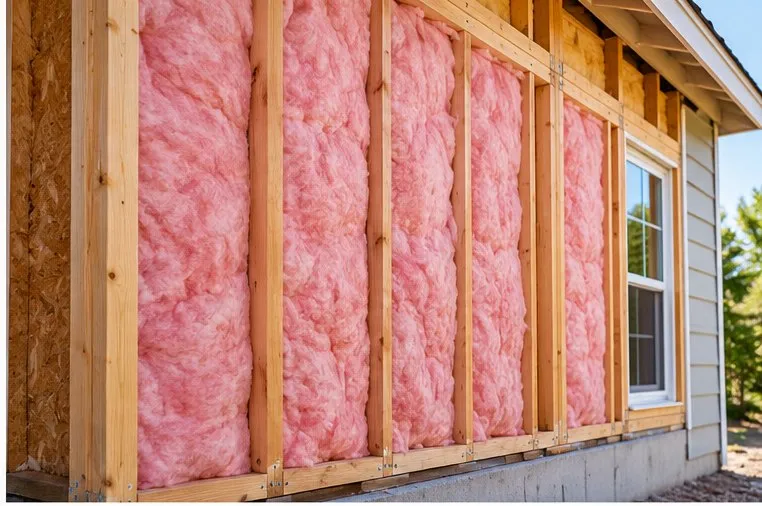
Two products, one word
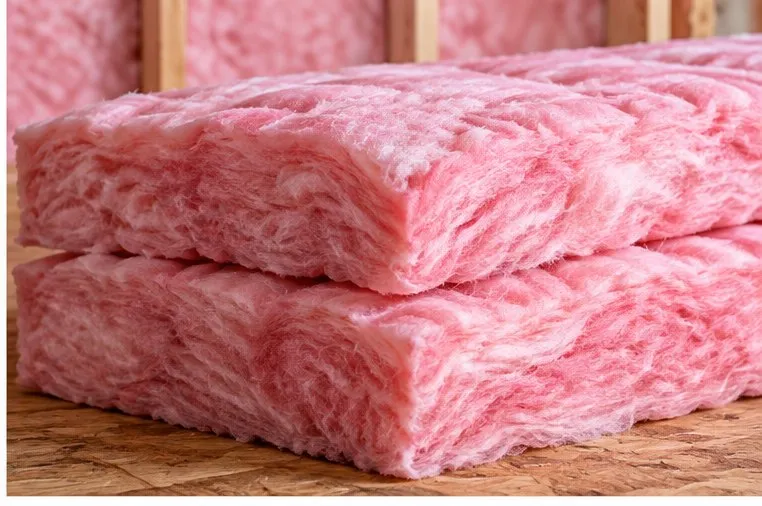
Fiberglass batts come pre-cut and need no equipment at all, which makes them the easiest entry point in insulation — you can do an attic in stages over several weekends. Blown fiberglass is loose fill and needs a hired machine, the same as cellulose.
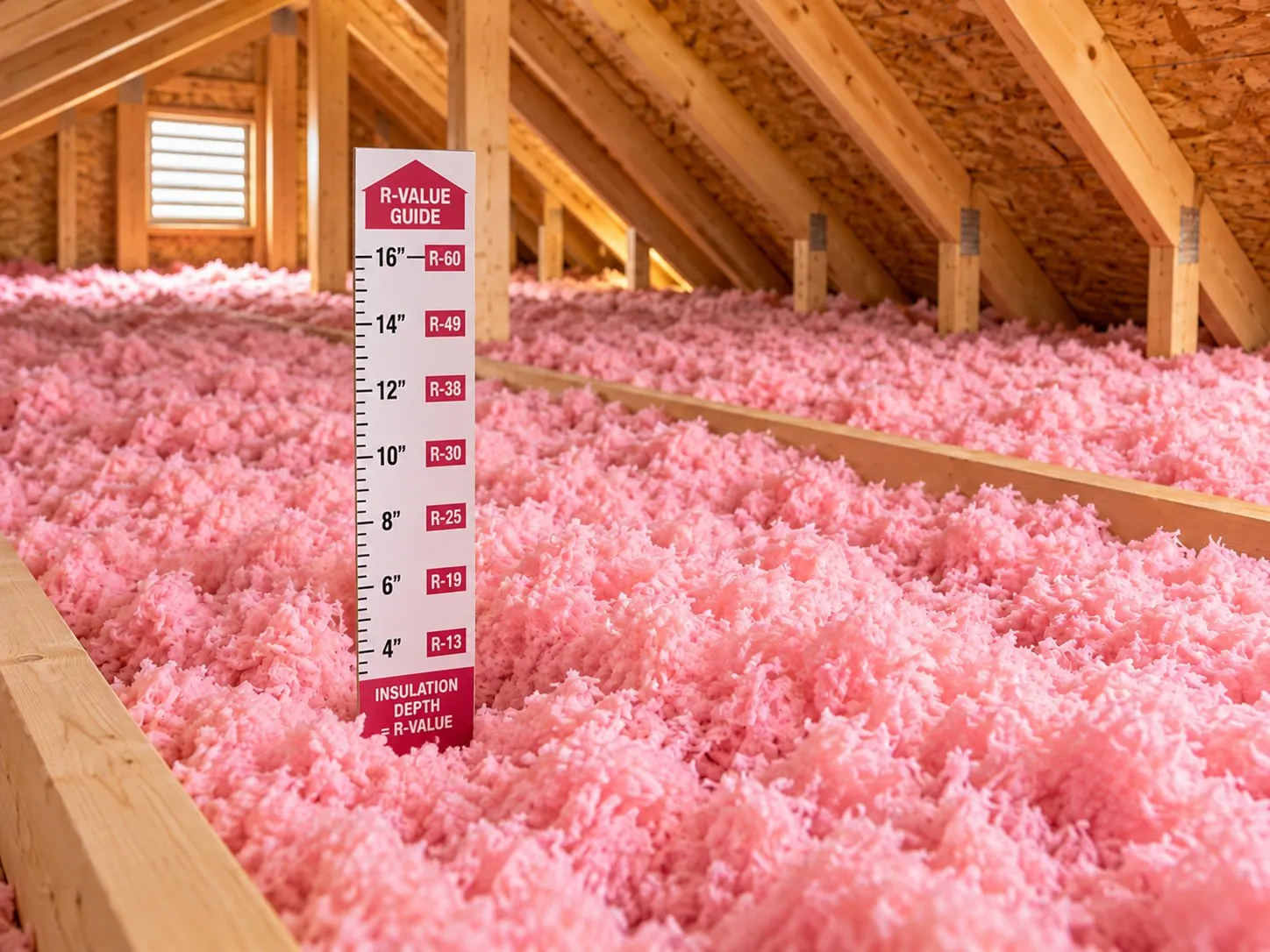
Batts are better where the framing is regular and reachable. Blown is better over an irregular attic floor, because loose fill flows around obstructions that batts leave gapped — and a gap costs far more performance than the R-value difference between the two products.
Fiberglass cost per square foot
At R-30. Bars show the typical range, so overlap is visible.
- $0.90–$2.10
- $1.05–$2.04
- $0.39–$0.72
- $0.33–$0.54
Cost per square foot
Both are priced by the R-value added, not by area alone — so topping up an attic that already holds R-19 costs roughly half what filling a bare one does. At R-30, batts need 9.5" and blown needs 12" for the same number, which is the practical difference when joists are shallow.
What a batt pack actually covers
The coverage printed on the bag is already net of framing. An Owens Corning R-15 bag states 67.81 sq ft, which is seven 15-inch batts for a 16-inch on-centre wall. Dividing your gross wall area by that figure over-orders by about 7%, and that 7% is the cuts allowance you want — so do not deduct the studs a second time.
| Batt | Thickness | Coverage per pack |
|---|---|---|
| R-13 | 3.5" | 106 sq ft |
| R-15 | 3.5" | 67.81 sq ft |
| R-19 | 6.25" | 75 sq ft |
| R-21 | 5.5" | 77.5 sq ft |
| R-30 | 9.5" | 58 sq ft |
| R-38 | 12" | 42 sq ft |
Why a bad install costs you the saving
Fiberglass is unusually sensitive to fitting. Compressing an R-19 batt into a 3½ inch bay gets you about R-13, not R-19 — you paid for the higher number and installed the lower one. Gaps, pinched corners and batts stuffed around wiring do the same thing.
Buy the batt that fits the cavity, split it around obstructions rather than compressing it, and the cheapest material on the market performs as rated.