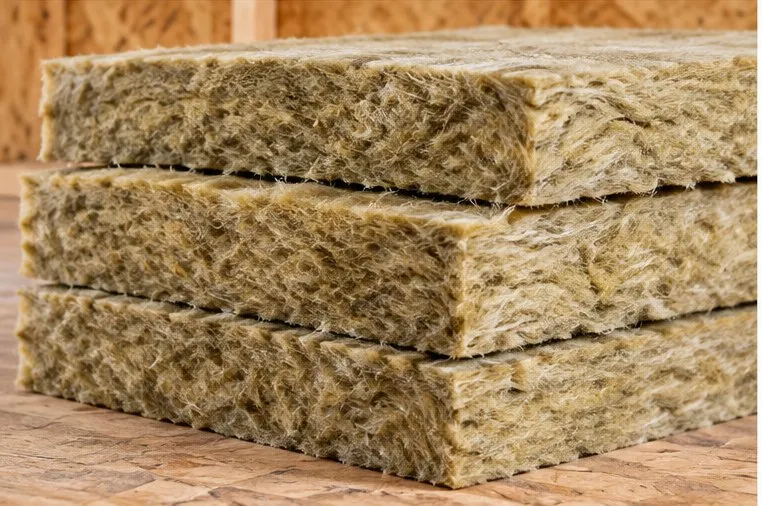
Cost per square foot
At R-30, mineral wool costs $0.84–$1.35 per square foot in material against $0.39–$0.72 for fiberglass batts. Installed, the gap narrows — $1.65–$3.30against $0.90–$2.10 — because labour is a bigger share of the bill than material and mineral wool is quicker to fit.
What the premium actually buys
- Non-combustible. Rock wool does not burn and holds its shape at temperatures that melt fiberglass binder. This is the reason it is specified around flues and in fire-rated assemblies.
- Sound. Noticeably better than fiberglass at the same thickness, because it is denser. The usual reason people pay for it in interior partitions, where it is doing nothing thermal at all.
- Water. It sheds liquid water rather than soaking it up, and dries without slumping. In a wall that might get wet, that is a durability argument rather than a performance one.
- Dimensional stability. It does not sag out of a stud bay over time, which is the common long-term failure of fiberglass in walls.
Where it is worth it
Interior partitions where you want quiet; walls and ceilings next to a garage or mechanical room; any assembly with a fire rating to meet; and crawl space or basement walls where damp is a real possibility. In a plain, dry, already-quiet exterior wall the extra money buys very little you will notice.
One place it rarely makes sense is an open attic floor, where depth is free and the cheapest R-value per dollar wins — that is loose fill's job.
Cheaper to fit than the price suggests
Mineral wool is stiff enough to friction-fit, so it stays put without the supports or stapling a fiberglass batt needs in a ceiling. It cuts cleanly with a serrated blade — a bread knife works — rather than tearing. For a DIY job that is real time saved, and it is why the installed gap is smaller than the material gap.
It is also denser and heavier to carry, and the fibres are coarser. The same respiratory protection applies as for any other mineral fibre.