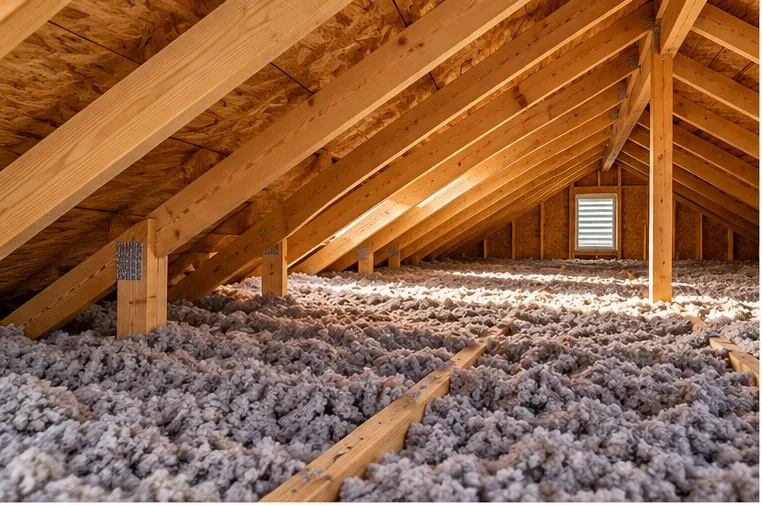
This is the most common real decision on an attic job, and it is usually settled by the shape of the space rather than by the numbers on the packaging.
Side by side
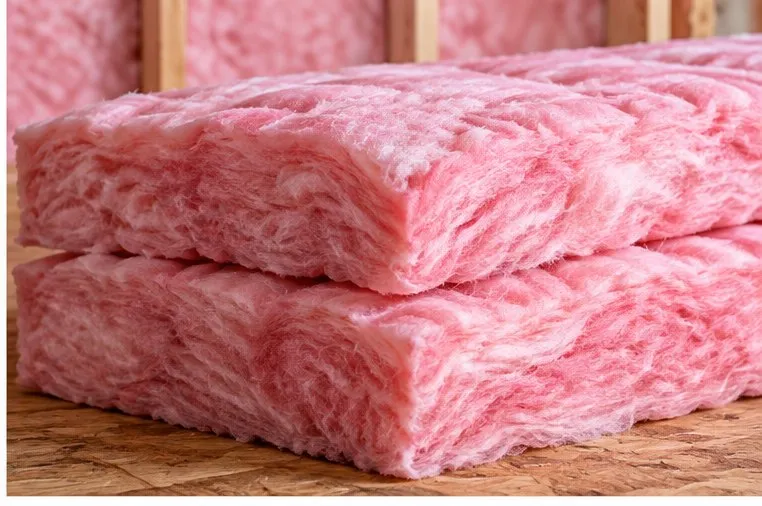 Batts
Pre-cut batts
- R per inch
- R-3.2
- Depth for R-30
- 9.5"
- Material cost
- $0.39–$0.72
- Equipment
- None
- No machine, no hire, no second person
- Do it in stages over several weekends
- Easy to lift later for wiring or inspection
- Coverage on the pack is already net of framing
Choose this when: Regular joist spacing, clear spans, work you want to do piecemeal.
More on batts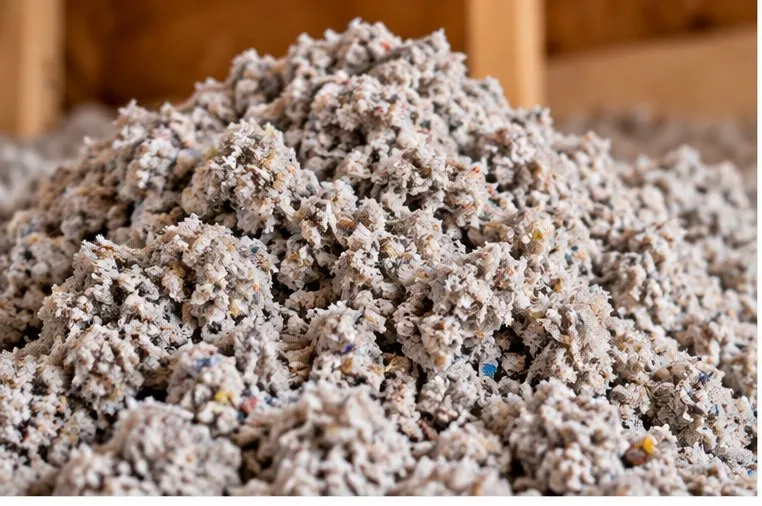 Blown-in
Loose fill
- R per inch
- R-3.5
- Depth for R-30
- 8.5"
- Material cost
- $0.30–$0.48
- Equipment
- Blower, usually free to hire
- Flows around wiring, pipes and bracing
- No cutting, no fitting, no gaps at the edges
- Covers the top of the joists in one pass
- Faster over a large area once set up
Choose this when: Irregular framing, obstructions, topping up what is already there.
More on blown-inGaps decide it, not R-value per inch
A batt only delivers its rating if it fills the cavity completely, touching the drywall below and the framing on all four sides. Every pipe, wire, brace and junction box is a place where that does not happen unless somebody carefully splits the batt around it — and most people compress it instead, which is worse than a gap.
Loose fill has no such failure mode. It goes where it is blown and settles into the shape it finds. In an attic with any real amount of clutter, loose fill installed averagely beats batts installed averagely, even though batts win on paper.
The other structural advantage: loose fill buries the joists. Batts laid between joists leave the timber exposed as a thermal bridge across the whole ceiling.
Effort and equipment
Blown needs a machine, and most big-box stores lend one free with a minimum bag purchase. That makes it a one-day commitment with two people — one feeding the hopper, one on the hose — and it is genuinely hard to do alone.
Batts need nothing but a knife and protection, and you can stop whenever you like. For a small attic, a tight budget, or a job you want to spread out, that flexibility is often worth more than the performance difference.
Which to choose
- Clear, regular, empty attic: either. Batts if you want to do it yourself over time.
- Obstructions, odd spacing, low clearance at the eaves: blown, clearly.
- Topping up existing insulation: blown — batts over loose fill trap air gaps between the layers.
- Walls you can open: batts, because a cavity you can see is a cavity you can fill properly.
- Finished walls: blown is the only option — it is the only thing that fits through a drilled hole.