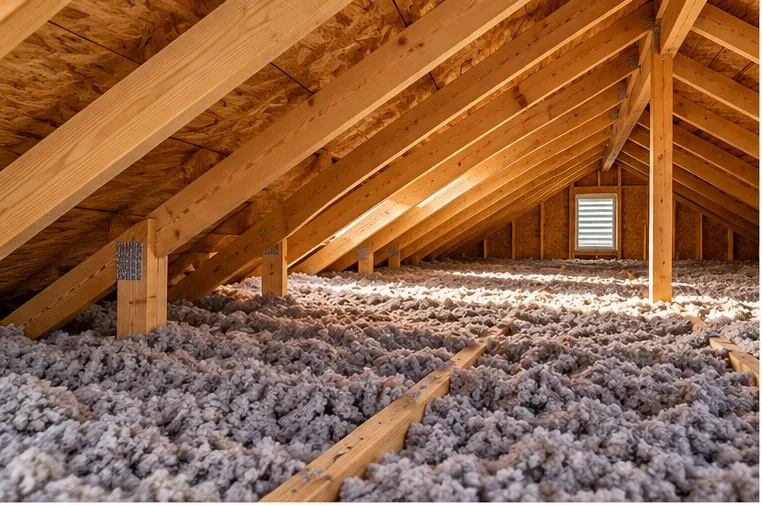
The one test that actually settles it
Put a tape measure into the insulation until it touches the ceiling drywall and read the depth. That number, with the material, is your current R-value — and it is the only check on this page that cannot be explained by something else.
Loose fill looks even and is not, so measure in several places. If you can see the tops of the joists, you almost certainly need more: joists are typically 2x6 to 2x10, which puts you somewhere between R-19 and R-30 at best, against a target of R-60 in a cold climate.
Seven signs worth taking seriously
- Rooms that will not hold temperature. Upstairs rooms hot in summer and cold in winter while the thermostat says otherwise.
- Ice dams. Ridges of ice at the eaves mean heat is escaping into the roof deck and melting snow that refreezes at the cold overhang. This is an insulation and air-sealing problem, not a gutter one.
- Uneven snow melt. Patches of bare roof while neighbours stay covered is heat leaving through the ceiling, visible from the street.
- Rising bills with no change in habits. Settled insulation loses depth over decades.
- Cold ceilings and draughts near light fittings. Recessed lights and loft hatches are the biggest single leakage points in most ceilings.
- The HVAC runs almost continuously in a mild spell when it should be cycling.
- Visible joists, gaps, or compressed insulation — especially at the eaves, where it is often pushed flat or missing entirely.
Two of these — ice dams and draughts around fittings — are usually air leakage rather than depth. Adding insulation over an unsealed ceiling does not fix them, which is why air sealing comes first in the order of work.
How much you should have
Current guidance for a cold climate is around R-60 in the attic, with a minimum of R-60. Houses built before the 1990s were commonly built to R-19 or less, and anything that has settled for thirty years is below what it started at.
The attic is where this is worth fixing first: depth is effectively free up there, so it is the cheapest R-value you can buy anywhere in the house.