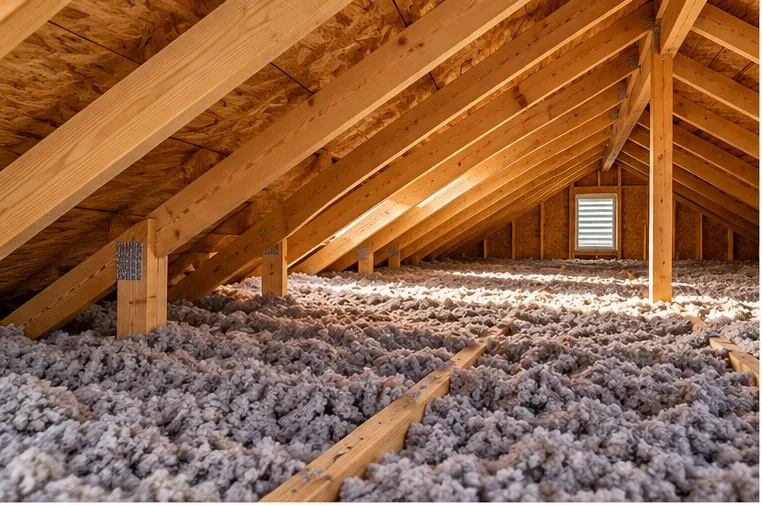
What it actually does
Heat moves three ways: conduction, convection and radiation. Ordinary insulation slowsconduction — that is what an R-value measures. A radiant barrier does nothing about conduction at all. It is a low-emissivity foil that reflects radiantheat, which in an attic means the heat radiating down from a sun-baked roof deck.
This is why you will not find an R-value on this page. A barrier does not have one in the sense the rest of the site uses, and the "R-equivalent" figures in product marketing are not measured the way R-values are. Comparing it to a batt on that basis is comparing two different things.
The number that does matter is emittance. A surface qualifies as a radiant barrier at an emittance of 0.1 or lower, and clean aluminium foil sits around 0.03 to 0.05 — it re-radiates almost nothing. That is the specification to check on a product, and it is the one a barrier can actually lose.
The air gap rule
A radiant barrier only works facing an air space. Laid flat against another surface it conducts straight through and does essentially nothing — this is the single most common way the product is wasted.
It is also why a dusty barrier stops working. Emittance is a property of the surface, not the material behind it, so a layer of attic dust on a horizontal foil takes it from 0.05 towards the 0.9 of an ordinary surface — the barrier is still there and is no longer doing anything. Barriers stapled to the rafters, facing down into the attic, stay clean far longer than barriers laid over the insulation.
Where it is worth it
Hot, sunny climates with long cooling seasons and ducts or air handlers in the attic — broadly zone 1, zone 2, zone 3. There the attic gets ferociously hot, the radiant load on the ceiling is large, and reflecting it measurably reduces cooling demand.
In a cold climate the maths inverts. The dominant problem is heat leaving in winter, which is conduction and air leakage — neither of which a barrier addresses. The money is better spent on depth and air sealing, and in zones 5 and colder a barrier is close to a waste.
What it does not replace
It is an addition, not a substitute. A barrier over a poorly insulated attic in Phoenix will help with summer cooling and do nothing for the winter heating bill or for comfort on a still, overcast day. The target R-value for your zone still applies.
Two installation cautions worth knowing. Foil conducts electricity, so keep it clear of wiring and junction boxes. And a foil-faced product is also a vapour barrier — if your walls already have foil-faced sheathing or thick closed-cell foam outside, do not add another interior barrier. A wall or roof sealed on both faces cannot dry in either direction.