Which material is right is usually decided by the space rather than by preference: an open attic floor will take anything and is cheapest filled with loose fill, a finished wall takes only what fits through a drilled hole, and a crawl space has moisture rules that rule several options out entirely.
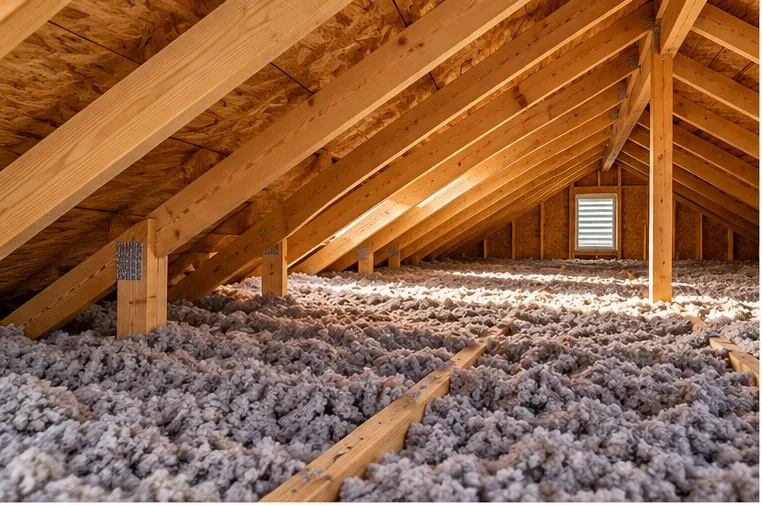
Cellulose Insulation
R-3.5/inCellulose is recycled paper treated with borate fire retardant, blown in as loose fill. It is the most common choice for attic retrofits in North America, largely because it fills awkward spaces that batts cannot.
Read more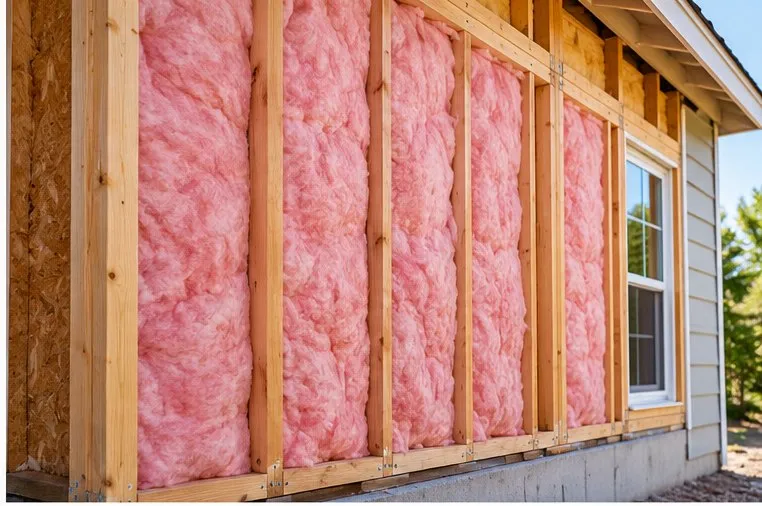
Fiberglass Insulation
R-3.2/inFiberglass is spun glass fiber, sold either as pre-cut batts or as loose fill for blowing. It is the cheapest widely available insulation and the most forgiving to live with — it does not absorb water, does not settle much, and does not interest rodents.
Read more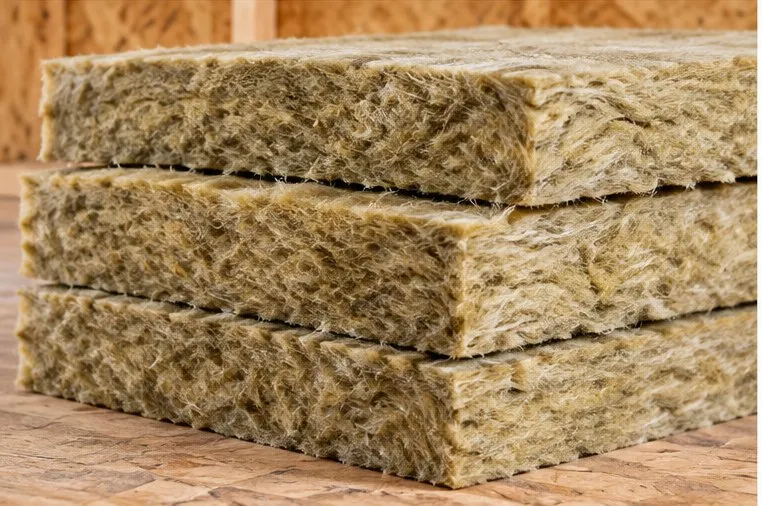
Mineral Wool Insulation
R-4/inMineral wool is spun from molten rock or steel slag. It costs two to three times what fiberglass does, and in most attics that premium buys nothing you need. Where it earns its price is fire resistance, sound control, and damp locations.
Read more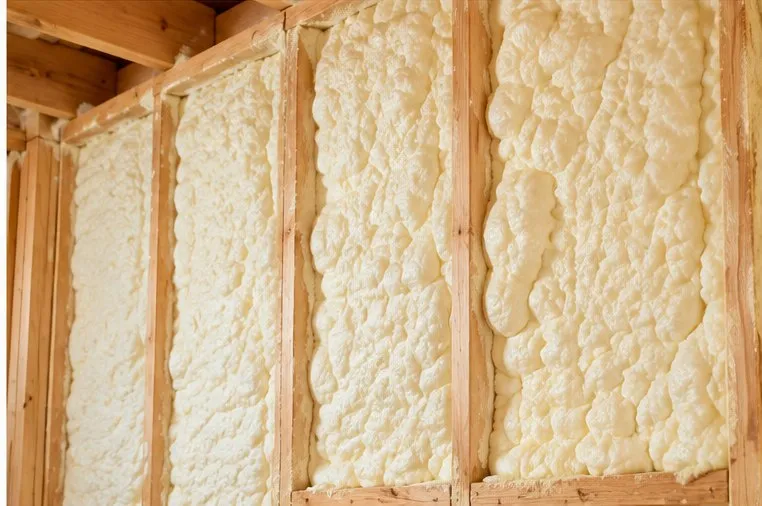
Spray Foam Insulation
R-3.6/inSpray foam insulates and air seals in a single step, which is its real advantage — not R-value. It is also the most expensive option by a wide margin and the least forgiving of bad installation. For most attic floors it is the wrong tool.
Read more
Rigid foam board
R-4.0–R-5.8/inXPS, EPS and polyiso. The DIY route for crawl space walls, and the continuous layer that gets a 2x4 wall to a code figure its cavity cannot reach.
Read moreRequirements by state
ReferenceThe climate zone, attic and wall target, and typical cost for all 51 states and DC — plus the nine where a single figure is not enough.
Read moreRadiant barrier
Zones 1–3Reflective foil for hot climates. Reflects radiant heat rather than resisting conducted heat — an addition to insulation, never a replacement.
Read more
Choosing between them
Start with the assembly, not the material. Each calculator asks what you are insulating first and then offers only the materials that can physically go there — which is a faster way to the answer than reading four product pages.
Four things R-value per inch does not tell you
- Air leakage beats R-value in a leaky assembly. A material that seals as it insulates can outperform a higher-R one that leaves gaps. This is why spray foam earns its price in an irregular cavity and not in a tidy one.
- Batt coverage is already net of framing. The figure on the bag — an Owens Corning R-15 bag states 67.81 sq ft, which is seven 15-inch batts — assumes studs. Dividing gross wall area by it over-orders by about 7%, which is the cuts allowance you want. Do not deduct framing a second time.
- Facing is a climate decision, not a preference. Kraft facing is not permitted in zones 1 and 2, and belongs on the warm interior side in zone 5 and colder. Never put an interior vapour barrier behind exterior foil-faced sheathing — a wall sealed on both faces cannot dry in either direction.
- Vermiculite means stop. If what is already up there is pebbly and grey-brown, it may contain asbestos. The EPA advises leaving it undisturbed and having it tested before any work.