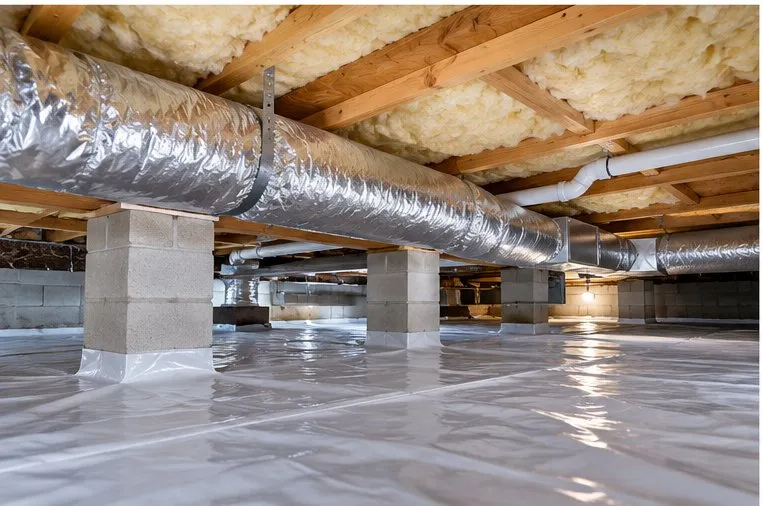
On these figures. We have no basement calculator, so the installed rates here are our crawl space wall rates — the closest comparable work we hold real data for. A basement is easier to work in than a crawl space, so expect the lower end of each range rather than the middle.
Cost by material
Board is priced per square foot per inch of thickness, which makes it easy to compare. EPS at $0.50–$0.75 and R-4 per inch, XPS at $0.70–$0.95 and R-5. The cheaper board is rarely cheaper once you buy the extra thickness it needs for the same R.
Closed-cell spray foam runs $1.50–$4.50 installed and gives R-6.5 per inch. It air-seals and acts as its own vapour control in one pass, which on an irregular rubble or block wall is worth more than the R-value difference. It is not a DIY material.
Do not use polyiso below grade. It has the highest R per inch of the three boards and it wicks moisture out of the concrete, losing R-value as it does. The board you picked for performance ends up the worst performer in the wall.
Moisture comes before insulation
A basement wall is in permanent contact with damp soil, and concrete is not a vapour barrier — it moves moisture inward continuously. Insulating before that is understood is how basements grow mould behind new studwork.
- Fix bulk water first: grading, gutters, downspout extensions, and any active leak.
- Run a dehumidifier through a wet season and see where the humidity actually sits.
- Only then insulate — and choose an assembly that can dry.
The assembly that works
Rigid foam or closed-cell spray foam directly against the concrete, sealed at every seam and edge. The foam is both the insulation and the vapour control, and because it keeps the concrete's moisture on the concrete side, the warm face stays above dew point and never condenses.
If you are framing a finished wall in front, the studs go inside the foam, and any batt between them must be unfaced. The wall has to be able to dry inward.
What not to build
Fiberglass batts in studs against bare concrete, with a polyethylene sheet on the warm side. It is the cheapest-looking option, it is still sold as a basement solution, and it fails reliably: the batt lets moist room air reach the cold concrete, the poly traps what condenses, and nothing can dry in either direction.
The same rule as every other assembly on this site — never seal both faces. A wall sealed on both sides cannot dry at all.