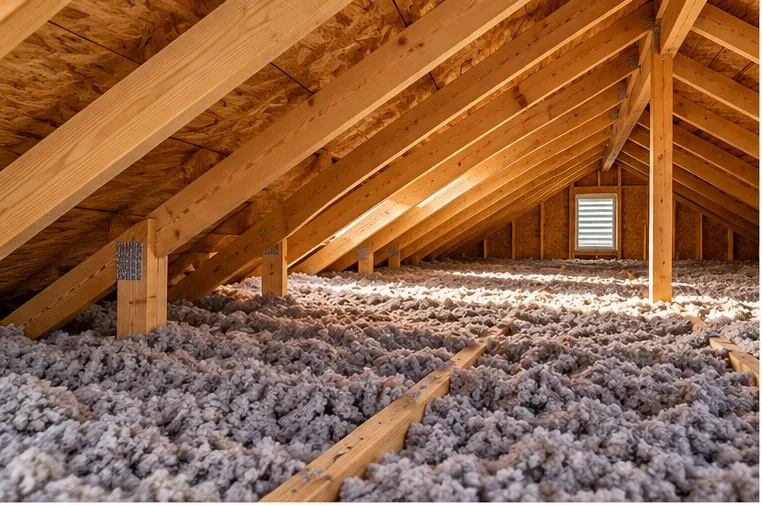
Where the water comes from
Warm household air holds far more moisture than cold attic air can. When it leaks up through the ceiling and meets sheathing that is below freezing, the moisture condenses straight out of it — as frost in a cold snap, which then melts and soaks the timber and whatever insulation is underneath.
That is why this shows up as frost or staining spread across the underside of the roof rather than as a stain in one place. A roof leak makes a mark below the hole. Condensation marks the whole deck.
The usual sources
- Bathroom extractor fans vented into the attic rather than through the roof or wall. Common, and about the worst thing you can do to an attic.
- Kitchen extractors and dryer vents terminating in the roof space for the same reason.
- The loft hatch, if it is uninsulated and unsealed — a large permanent opening between a warm house and a cold attic.
- Recessed lights, plumbing stacks, wiring holes and interior wall top plates — individually small, collectively the largest leak in most ceilings.
- Blocked soffit vents, usually insulation pushed into the eaves, which stops the cold air wash that would otherwise carry moisture away.
How to fix it
- Vent every fan to the outside. Through the roof or a gable wall, with a proper terminal — not into the attic, and not just near a vent.
- Air seal the ceiling. This is the one that stops the moisture arriving at all.
- Restore the ventilation path. Baffles at the eaves keep soffit vents clear so the deck stays cold and dry. The IRC asks for net free ventilating area of at least 1/150 of the attic floor, or 1/300 where a vapour retarder is fitted on the warm side or 40–50% of the venting is high in the space — and a blocked soffit takes out the low half of that, which is the half doing the work.
- Deal with existing mould before covering anything. Small areas can be cleaned; widespread growth on structural timber needs assessing properly.
If what is already up there is pebbly grey-brown vermiculite, stop. It may contain asbestos, and the EPA advises leaving it undisturbed and having it tested before any work at all.
Insulate after, not before
Adding insulation over an attic with a moisture problem makes it harder to inspect, harder to dry, and hides the staining that would have told you how bad it was. It also does not help: insulation slows heat, it does not stop air movement, and air movement is what is carrying the water up there.
Seal and vent first. Then insulate, and the new material stays dry and performs as rated.