Side by side
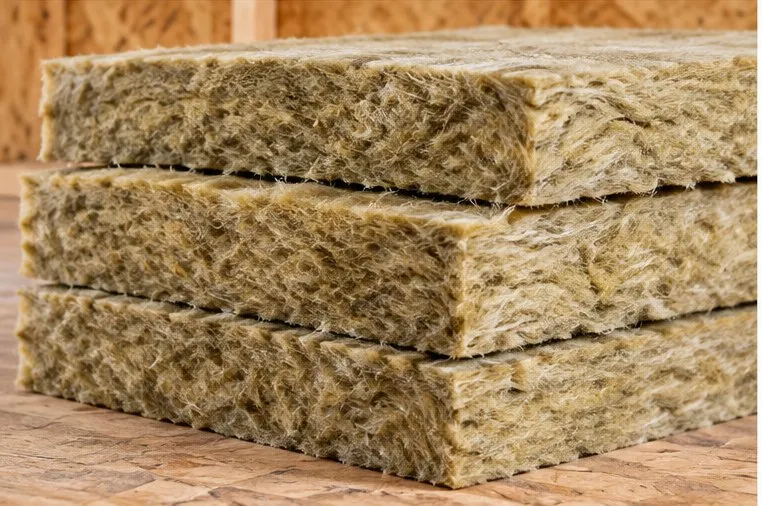 Mineral wool
 batts
- R per inch
- R-4
- Depth for R-30
- 7.5"
- Material cost
- $0.84–$1.35
- Installed
- $1.65–$3.30
- Non-combustible — does not burn or melt
- Noticeably better at damping sound
- Sheds water and dries without slumping
- Friction-fits, so it does not sag over time
Choose this when: Partitions you want quiet, fire-rated assemblies, damp-prone walls.
More on mineral wool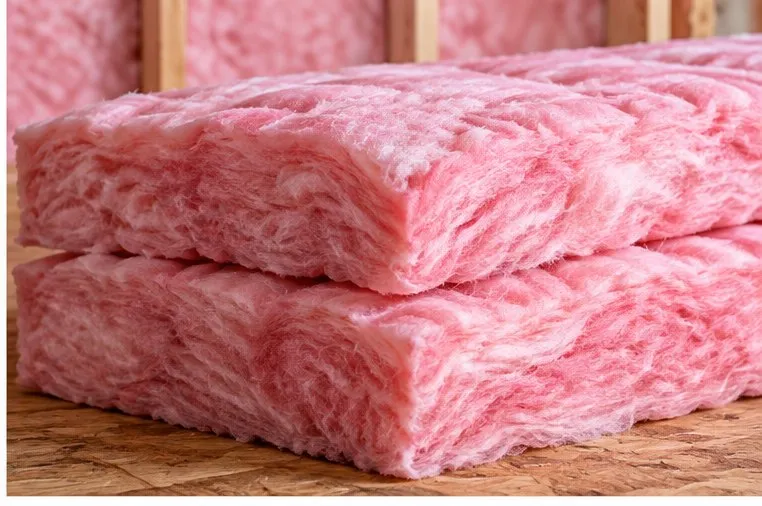 Fiberglass
 batts
- R per inch
- R-3.2
- Depth for R-30
- 9.5"
- Material cost
- $0.39–$0.72
- Installed
- $0.90–$2.10
- About half the price for similar R-value
- Lighter to carry and lift overhead
- Available everywhere, in every size
- Faced versions available for vapour control
Choose this when: Ordinary dry exterior walls and attic floors on a budget.
More on fiberglassWhat double the price buys
Not R-value. The two are close enough per inch that in a standard cavity you will end up at a similar number either way. What you are buying is behaviour under conditions fiberglass handles badly.
- Fire. Rock wool is non-combustible and holds shape at temperatures that melt fiberglass binder. This is why it is specified around flues and in rated assemblies.
- Sound. Density is what damps sound, and mineral wool is denser. In an interior partition it is doing nothing thermal at all — the sound is the whole point.
- Water. It sheds liquid water and dries without slumping. Fiberglass that gets wet mats down and stays down.
- Time. It friction-fits and stays put. Fiberglass in a wall tends to sag away from the top plate over years, leaving an uninsulated strip exactly where warm air collects.
Fitting them
Mineral wool is stiff enough to hold itself in a bay, so it needs no supports or stapling in a ceiling, and it cuts cleanly with a serrated blade — a bread knife is the traditional tool. Fiberglass tears rather than cuts and usually needs fixing in place overhead.
That is why the installed gap between them is narrower than the material gap: mineral wool is quicker to fit, and labour is the larger share of a professional bill.
Both are mineral fibre, and both need the same respiratory protection. Mineral wool's fibres are coarser and it is heavier to carry.
Which to choose
- Bedroom or office partition: mineral wool. You will hear the difference; you would not feel a thermal one.
- Garage common wall: mineral wool, for the fire performance next to a space with a car in it.
- Ordinary dry exterior wall: fiberglass. The premium buys little you will notice.
- Open attic floor: neither — loose fill is cheaper per R and has no gaps.
- Anywhere damp is plausible: mineral wool, or get the moisture fixed first.