Why the floor is cold
A vented crawl space is, thermally, outdoors. If the floor above it is uninsulated or the insulation has failed, the underside of your floorboards is sitting in winter air. Carpet and rugs make it feel better without changing anything.
Old batts between crawl space joists fail in a particular and very common way: they sag out of contact with the subfloor, soak up damp, and get nested in. A batt hanging an inch below the floor it is meant to insulate is doing almost nothing, because the air gap convects. Look before you assume there is nothing there — often there is, and it has simply let go.
Check the ducts before anything else
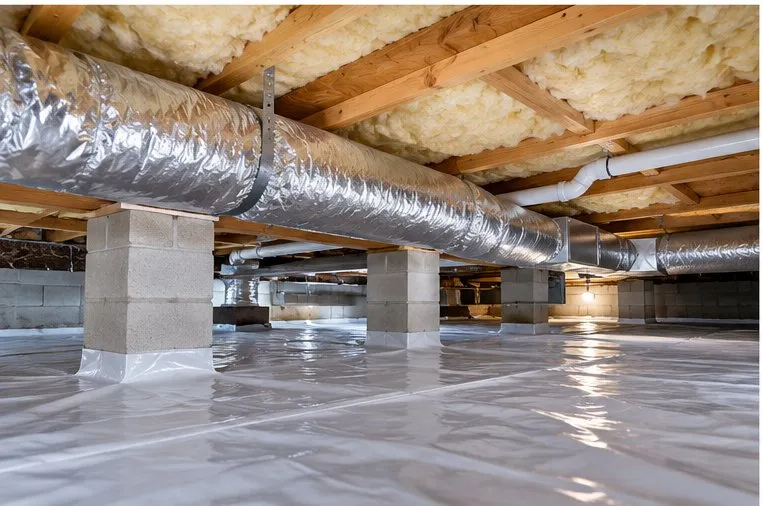
If heating ducts run through the crawl space, they are likely leaking conditioned air into a space that is effectively outside. That is a double loss — you paid to heat the air and it never reached the room — and it also makes the floor colder by cooling the space below it.
Ducts in the crawl space strongly favour sealing the whole space rather than insulating the floor, because sealing brings the ducts inside your thermal envelope and the air they leak stays in the house.
Two ways to fix it
Insulate the floor and keep the vents open. Cheaper. Right in dry climates, and required where FEMA flood openings exist. A vented crawl space wants1 square foot of vent per 150 square feet of floor under the IRC, reduced to 1 per 1,500 where a Class I vapour retarder covers the ground — so the liner earns its place even on this route. Use material that will not sag or absorb damp, and support it properly in contact with the subfloor.
Encapsulate. Seal the vents, line the ground, insulate the perimeter walls, and control humidity. More expensive and much more durable, and the approach building scientists now recommend — venting a crawl space in summer draws humid outdoor air onto surfaces below its dew point, so the ventilation meant to dry the space is what wets it.
Two things come before either: standing water and any atmospherically-vented furnace or water heater in the space. Insulating over water hides a problem, and sealing a space containing a combustion appliance can cause backdrafting and carbon monoxide.